Notes on the Open Day

By Mark Zygadlo

A group of people standing in a line

Description automatically generated

The end of February may seem like a risky time to organise an outdoor event to reflect on the progress of the Glenmidge Burn Project based, as it is, in one of the wettest areas of Scotland. But we were very lucky: the 22nd of February was a perfect day in lots of ways.ย 

It is just over a year since the Project was incorporated as a SCIO and since it purchased some 30 acres of mixed land at Glenmidge so it seemed like a good time to host a gathering of the membership, friends and anyone interested to review our progress, thank those who have supported us and think about the future.

A group of people standing in a field

Description automatically generated

The day started with a morning of activity at Glenmidge. We split into two groups for an hour of soil sampling and worm counting for the first group and photography for the second. Then we rearranged ourselves and one group kick-sampled the burn and the other learnt about identifying trees in winter on the lower slopes of the hill. These simple activities are surprisingly rewarding and engaged us all in a shared sense of wonder at what lies just out of sight. Despite the apparent simplicity of digging up a cube of earth and sifting through it to identify and count earthworms, the information gleaned about the condition of the soil is fascinating.

A group of men looking at a sample

Description automatically generated

It’s also infectious, in the non-medical sense, and by the time we arrived at Keir Hall for lunch everyone was full of enthusiasm for what we had seen and learned. 

A tasty soup and sandwiches follower by tea, coffee and baking was provided by the Three Village Cafรฉ (a community enterprise in Penpont set up by the KPT) was much appreciated by all and was followed by a series of presentations about the project.

  • Introduction and background from project chair, Mark Zygadlo.
  • Senga Greenwood from the D&G Climate Hub, which has generously supported the project and sponsored this event, gave a concise description of their work.
  • Dave Kirby, project Trustee, showed pictures he has been taking regularly from the same spots on the project for over six months revealing a fascinating record of seasonal and longer term changes.
  • Trustees Antoine Lemaire and Dr Michael Muir described the way information from baseline and other specialised surveys has been put together to map the various habitats of the site, how all this information is stored and shared and, most important, how it informs our understanding of the land itself and its ecology.

We were then entertained by a series of short talks by partnering projects.

  • McNabb Laurie told us about D&G Woodlands and the Native Wild Apple project which the GBP contributed to.
  • Malcolm Haddow described the exemplary work of SWSEIC (South West Scotland Environmental Information Centre.)
  • John and Ben, the famous double act, described the work of NithLife.
A group of people sitting in a room

Description automatically generated

A Q&A session developed into a very interesting conversation, which some of the visitors with academic and practical experience in environmental projects initiated, into how very unusual the Glenmidge Burn Project is. Unlike the many larger environmental organisations working towards more specific issues like education, community engagement or large scale โ€˜rewildingโ€™ projects, a small-scale operation such as ours is extremely valuable because we are entirely free of obligations. So many projects set out with huge financial burdens, contractual agenda determined by funders or time-related targets for species reintroduction or increase. We have none of these. We are able to engage the land itself as an organic guide to the direction and development of the project.

Significant in this context are the connections we have made with other environmental groups, like SWSEIC and the University of Glasgow, whose knowledge and experience supports our work and to which we contribute data. 

Conversations like this are invaluable because they offer us a fresh and objective view of ourselves and our project. So, our heartfelt thanks to all who came along and made the day perfect.

ย And special thanks to the D&G Climate Hub who sponsored and co-hosted this event, Thornhill Community Transport, Keir Village Hall, the KPT and to all the organisations which support us and contributed to the day.
Super Soil

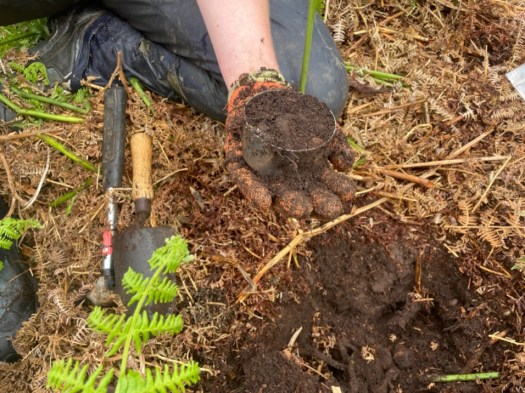
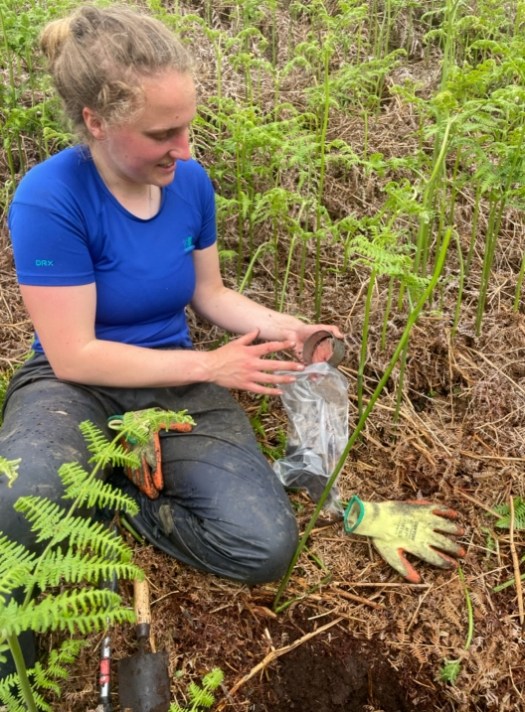
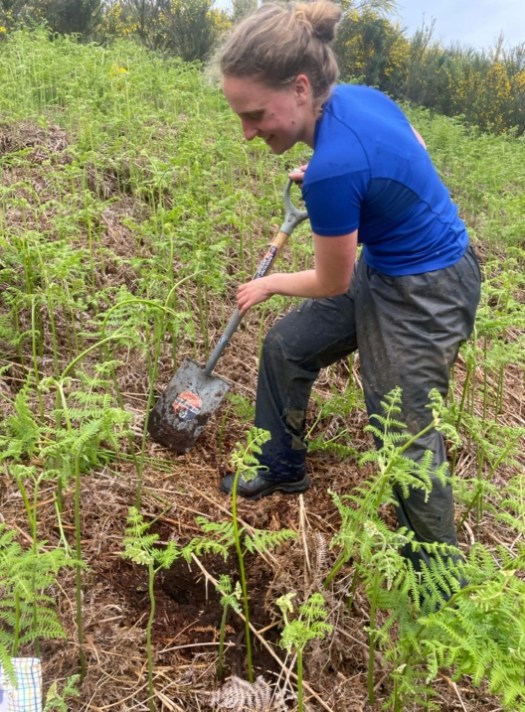
Alice is from the University of Glasgow and is carrying out a project on our land investigating the soil.

Alice digs a shallow hole in a recorded location.
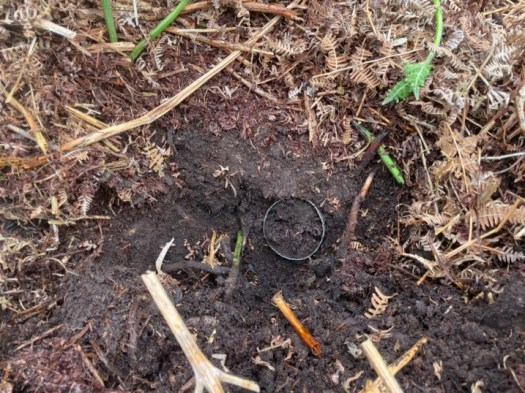
She pushes a short metal cylinder measure into the ground.
Cylinder provides an equal volume of soil from each location
Each sample is bagged, numbered and sealed, and taken to the lab for analysis.

Wonderful Waxcaps

By Antoine Lemaire

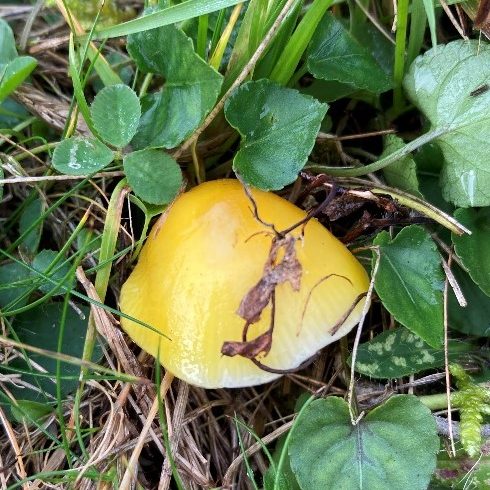
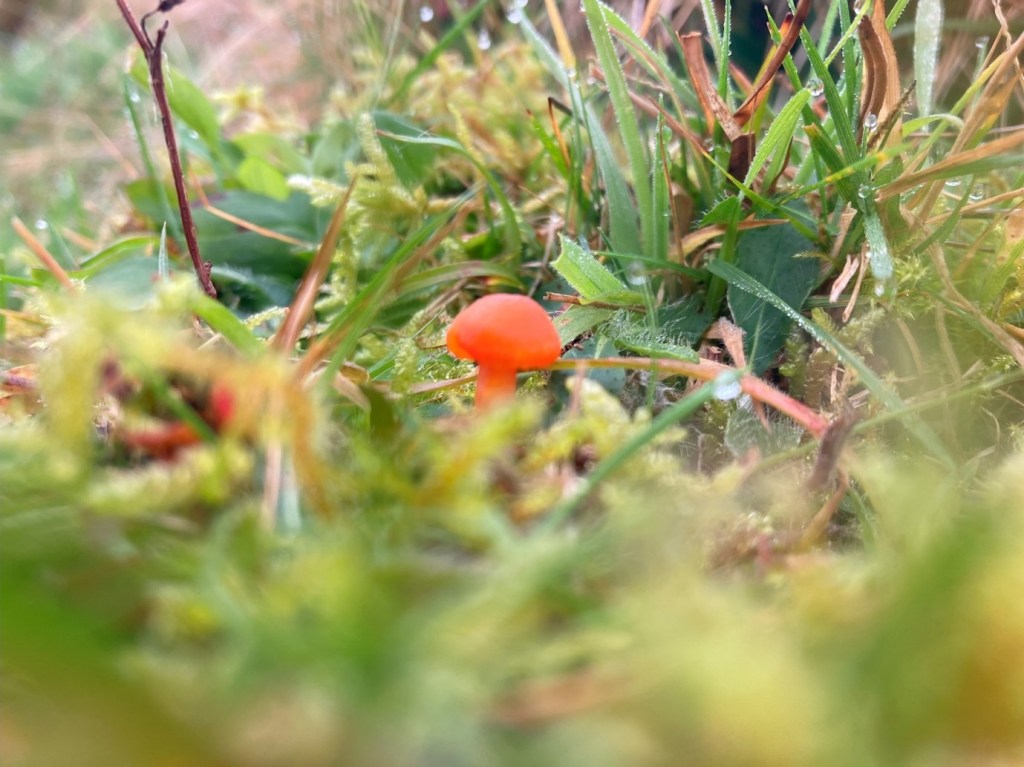
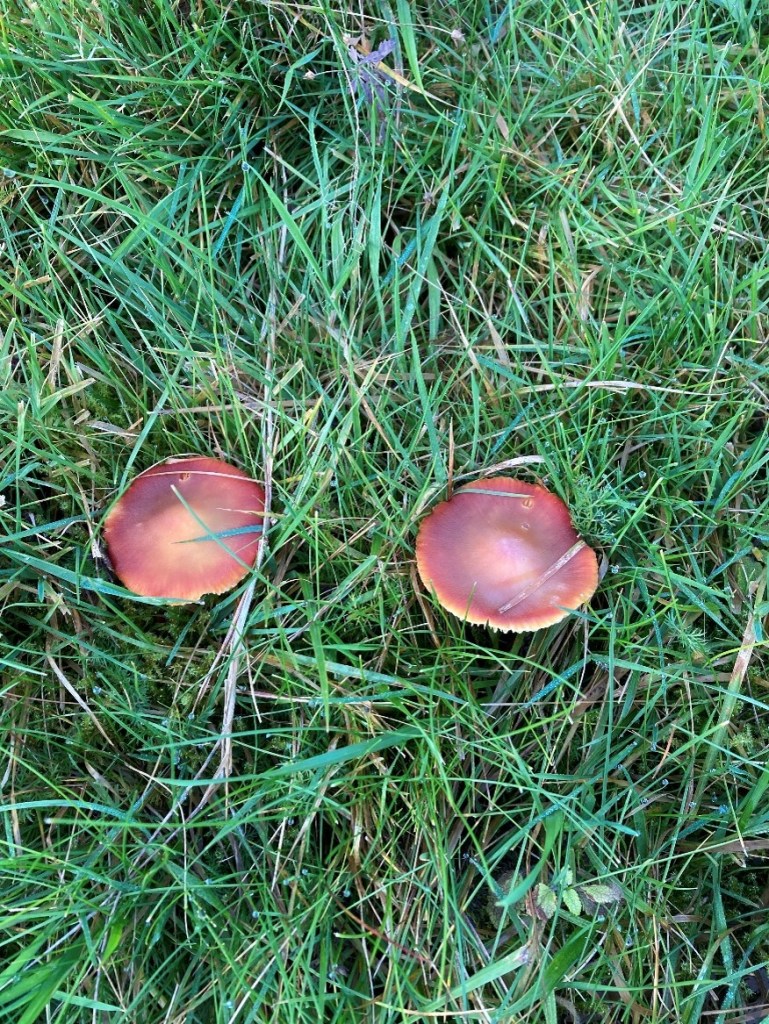
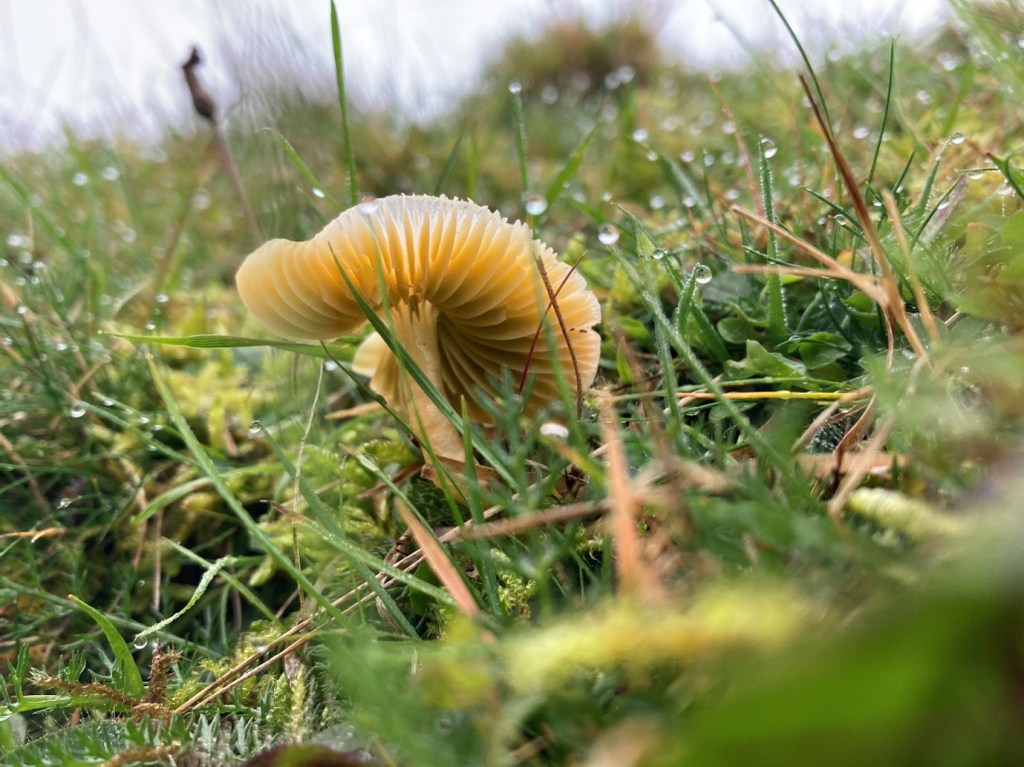
Last Saturday, I went out to carry out a fungus survey on the ground along the burn. What a beautiful day it ended up being, despite a foggy and cloudy start! The aim was to take part in Plantlifeโ€™s Waxcap Watch, a citizen science project aimed at recording grassland fungus species. Waxcaps are beautiful, colourful mushrooms and it can sometimes look like a child has tossed their Legos across the field!ย ย 

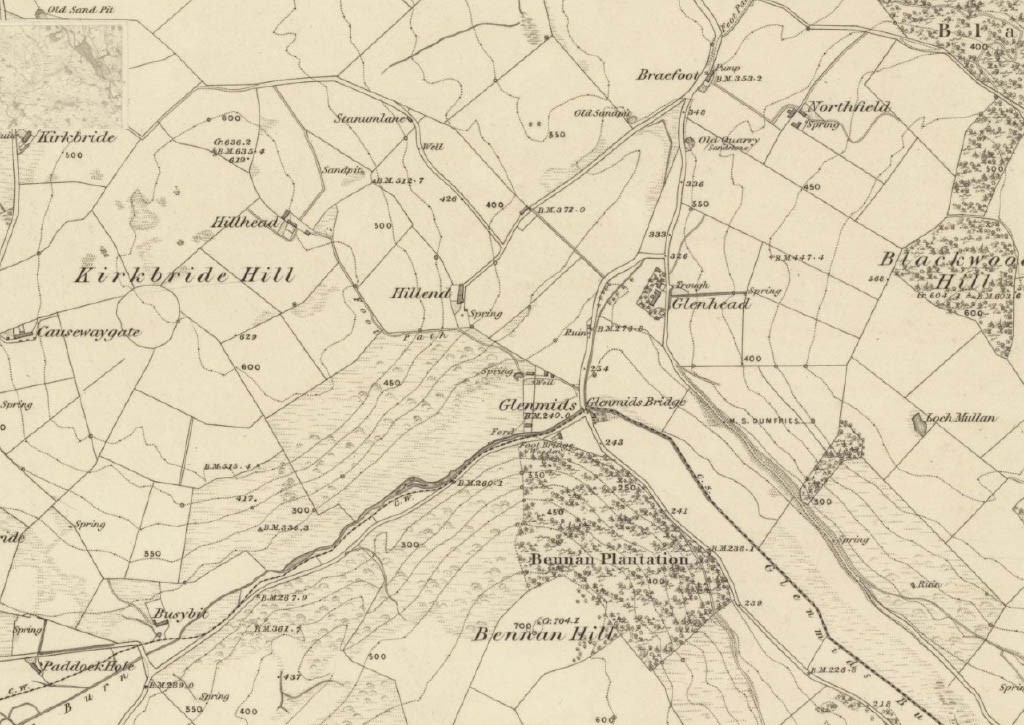
The land on Kirkbride Hill and around has been used for grazing for a long long time. The land, including the steep hillside, is shown to be a meadow on the 1856 Ordnance Survey map.ย ย 

1856 Ordnance Survey Map of Kirkbride Hill

So I thought it might be a good place to go look for waxcaps and it turns out there is a good amount of them around! According to the Waxcap watch app, this means that the site is promising and we should carry on monitoring it over the next month or so.ย ย 

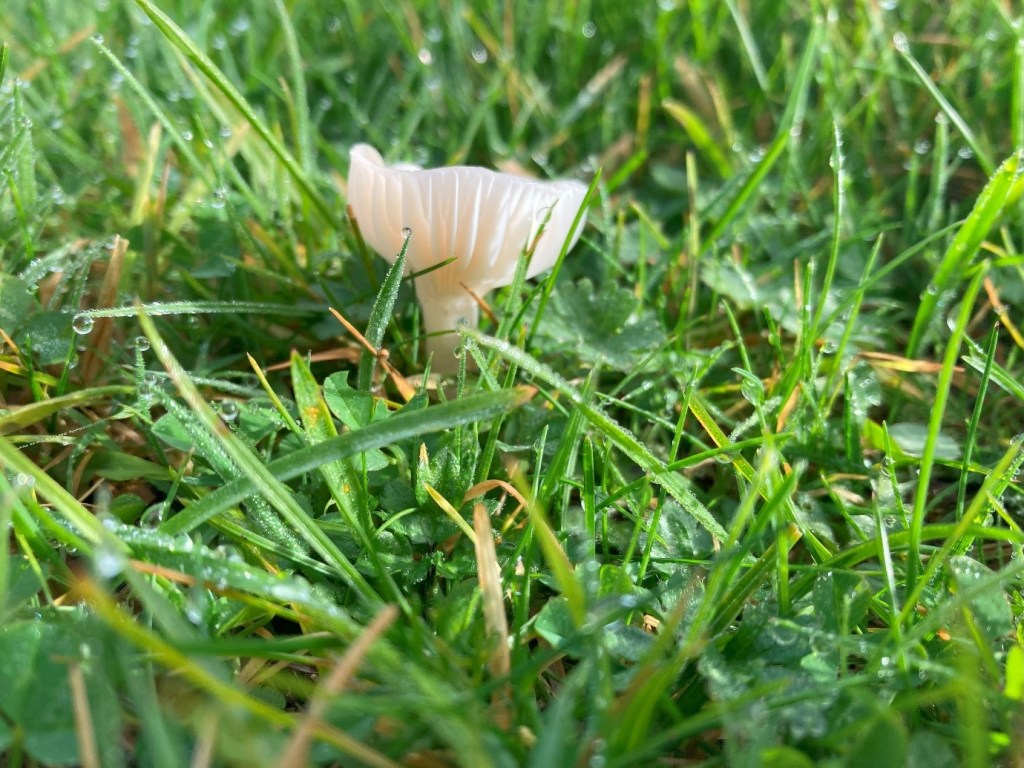
Hereโ€™s a selection of the waxcaps I came across. As their name suggests, their cap is slightly waxy and slimy. They grow in rough, unimproved grasslands, which is a dwindling habitat as farming practices have tended to move towards spreading slurry, ploughing and reseeding pastures.ย ย 

Snowy waxcap: By far the most commonly found on this survey. There were loads of them in the green field above Glenmidge. This field was very good for waxcaps and other grassland fungus.ย 

golden waxcap

Parrot Waxcap: Always has some green in it to varying degrees. The green fades with age but there will always be a hint of it whether on the cap or the stipe or even the gills.ย ย 

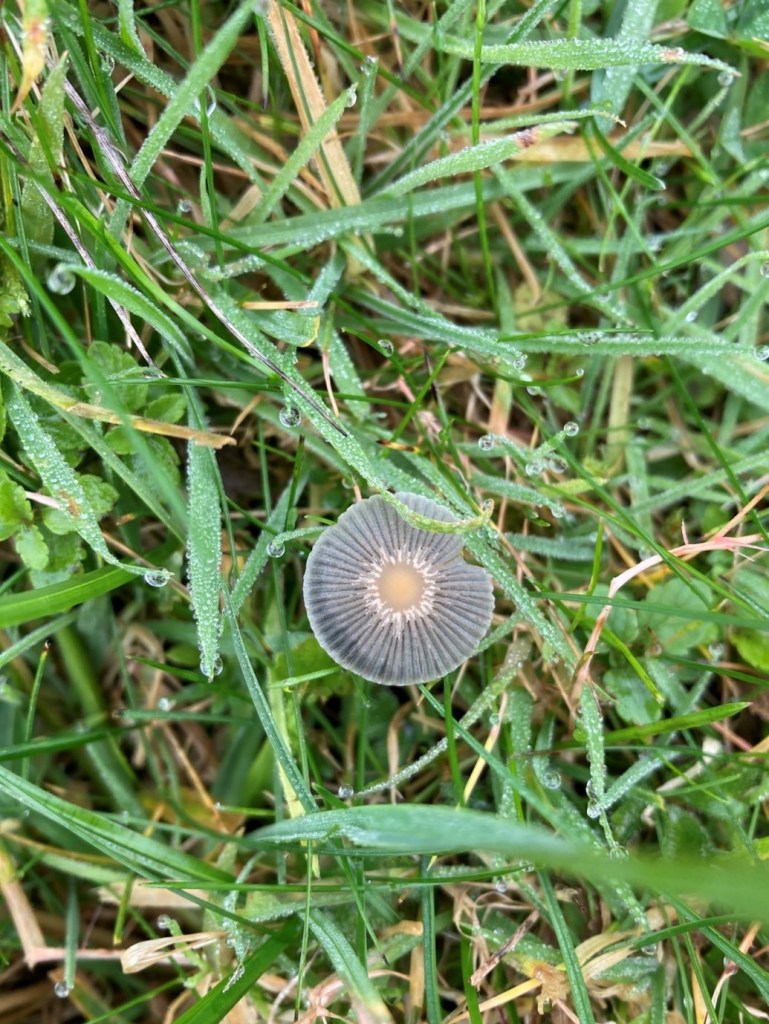
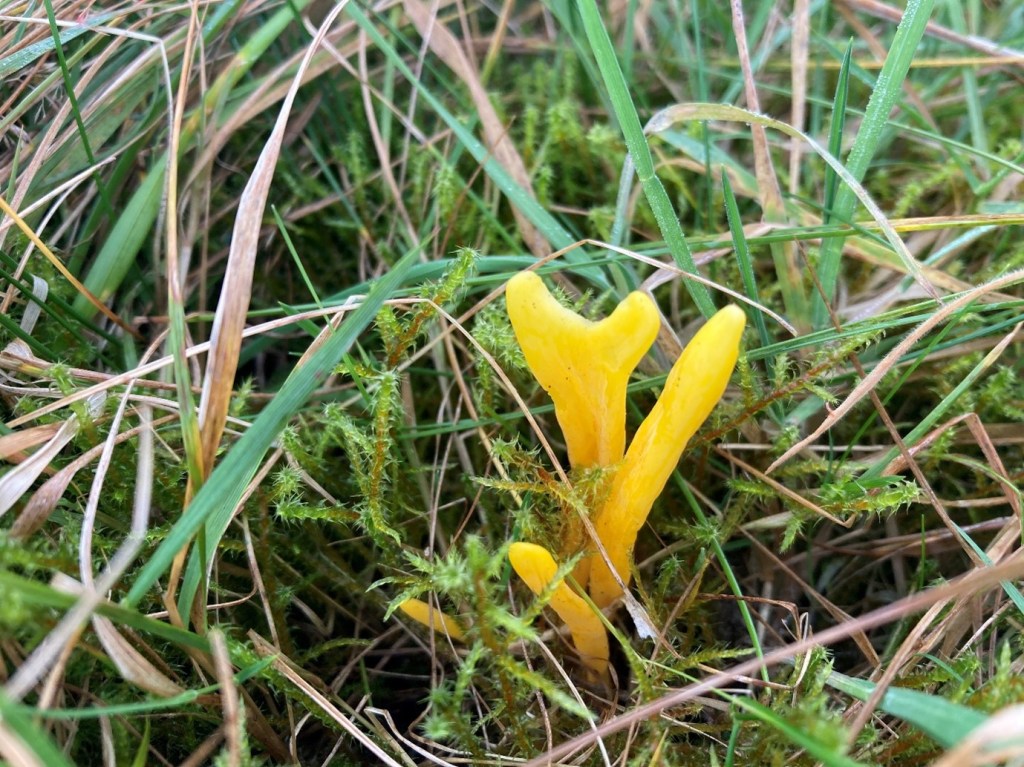
And then there are the other grassland fungi, like the cute pleated inkcap, the yellow clubs and more.ย ย 

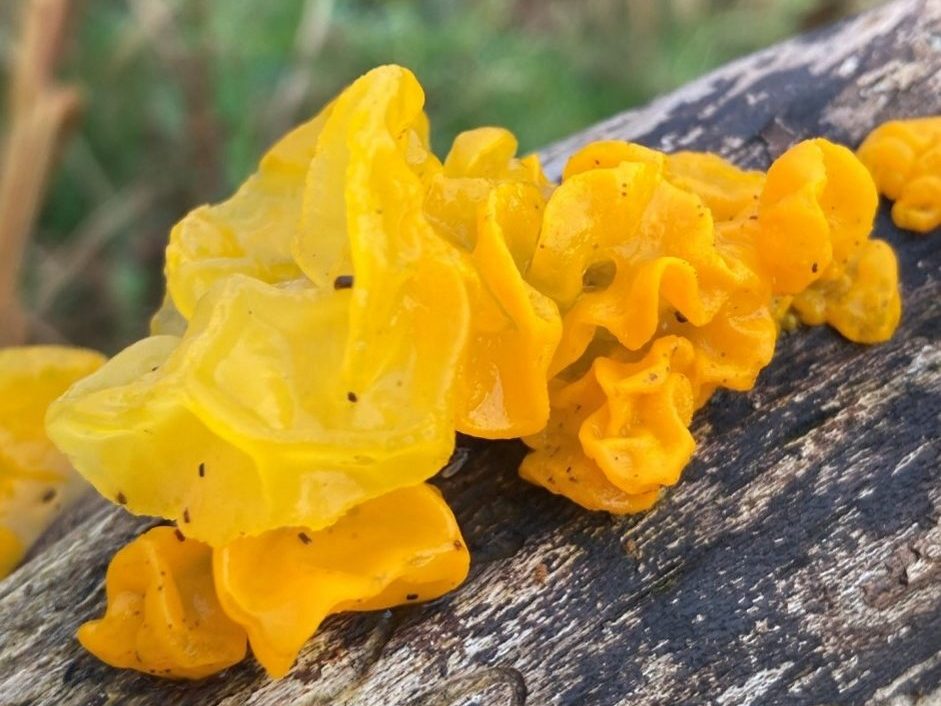
Other colourful fungus was found on dead broom such as the aptly named yellow brain.ย ย 

yellow brain

Keep an eye out for a list of dates for surveys coming up! 

A Sunday morning well spent

By Mark Zygadlo

It is a cold and drizzly Sunday morning, typical of this spring. Seven of us meet in a muddy lay-by near the Halliday Hill roadend. We change into wellies and waterproofs before venturing into the undergrowth with pencils, pads and reference books at the ready. This is the fifth survey session of the Glenmidge Burn Project and although I have lived only five minutes walk from this spot for over thirty years, I have never been here before. It is densely wooded and impenetrable in some parts. 

We split into groups and make parallel transects from the road to the burn about 50 yards apart. We find three distinct habitat types. Next to the road is 15-year-old mixed broadleaf plantation. Sitka spruce of the same age occupies the middle part. In the final section, dense poplar regrowth from a plantation felled about 15 years ago. Itโ€™s a pattern that seems to extend as far as Barndarroch, about a kilometre downstream.

We are making a baseline habitat survey of the area but even on a single walk-through like this, we pick up other clues to its history and management. There is deciduous regrowth from much bigger, older tree-stumps in all three of the main habitats. Close to the village, there are also odd examples of garden escapees: a rhus, a cultivated honeysuckle. Along the burn, there is alder, willow, rushes and I almost tread on an enormous frog, all of which is predictable in wetland areas. Wood sorrel grows among the dense undergrowth of bramble, nettle and rosebay willowherb, suggesting a much older woodland once covered the whole site. Ancient woodland is a scarce habitat type home to communities of flora and fauna not found elsewhere and so is in desperate need of protection. 

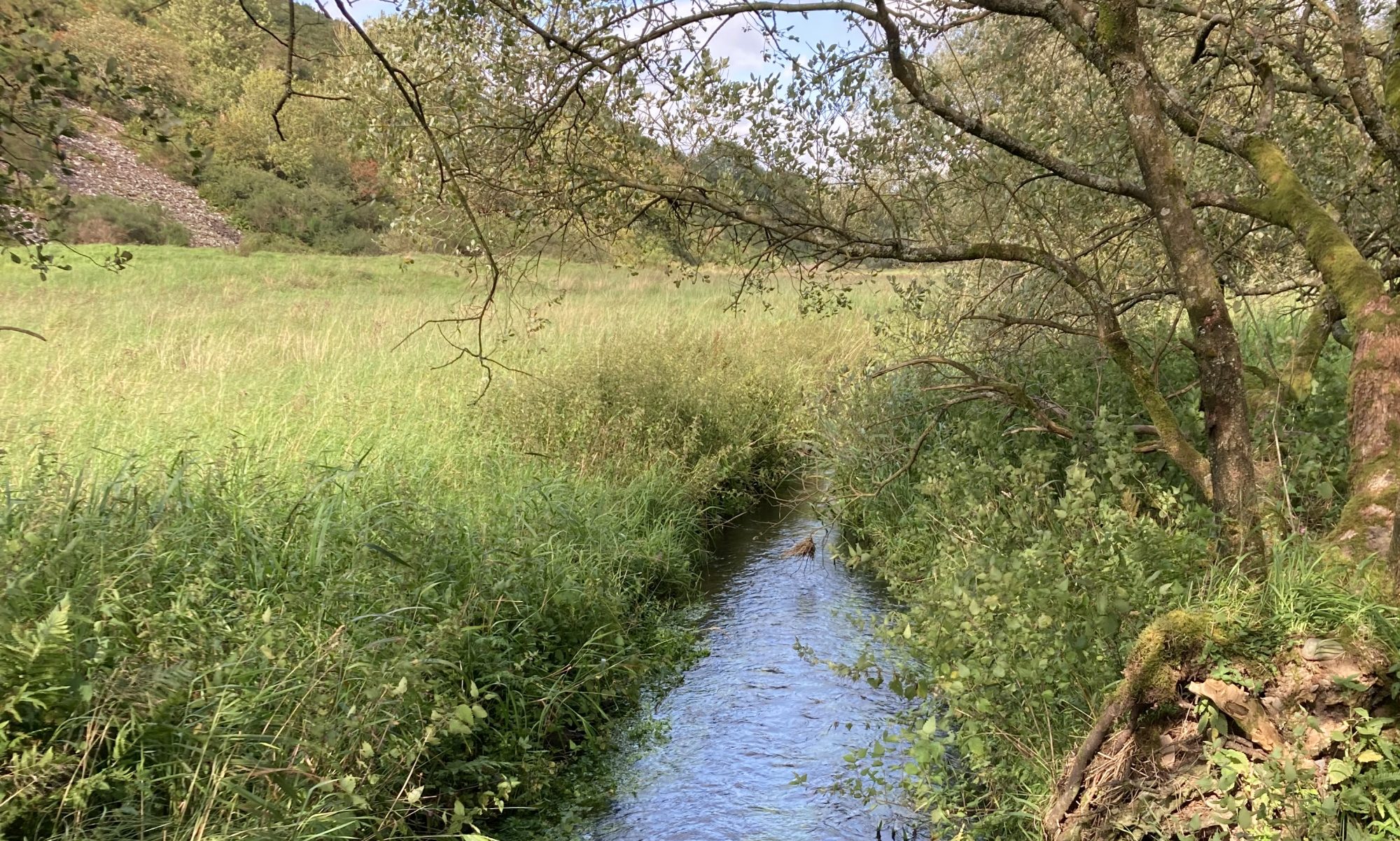
Along this section, the burn is regulated by an enormous dead-straight dike. It has very obviously been confined along all of its upper reach: the opposite bank is built up with stone dredged out of it and it runs in unnaturally straight lines all the way to the Cuil Bridge.

At the burn, we meet up and compare notes. We are fortunate in this session to have professional expertise on hand. I am amazed by their exhaustive knowledge and the understanding with which the trained eye can pick out details that the novice, like me, misses. From beneath the skull of a perfectly polished sheepโ€™s skeleton, a red-breasted carrion beetle is picked up and turned over to reveal his identifying colour before being returned to the ground to carry on his work. This beetle is apparently quite rare and I am told that finding them here indicates an environment with high biodiversity. 

Trudging back up the hill, despite the water running into my boots, it feels like a morning well spent. I have remembered two important things: wood sorrel is an indicator of ancient woodland and the carrion beetle is a very good sign. 

– – – – – – – – – – – – – – – – – – – – – – – – – – – – –

If interested in contributing to the blog, please send an email to glenmidgeburnproject@gmail.com.