
By Antoine Lemaire
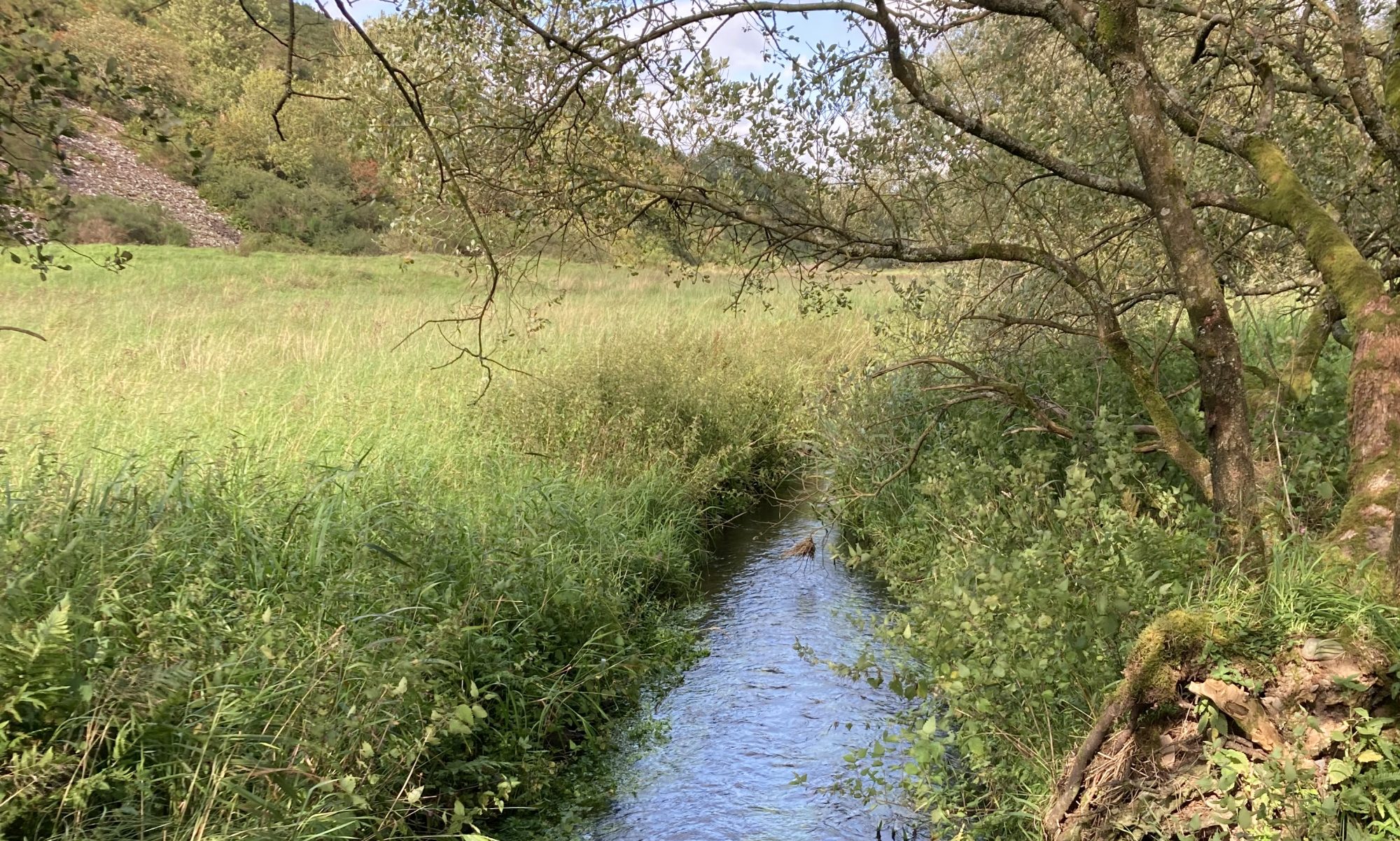
Last Saturday, I went out to carry out a fungus survey on the ground along the burn. What a beautiful day it ended up being, despite a foggy and cloudy start! The aim was to take part in Plantlife’s Waxcap Watch, a citizen science project aimed at recording grassland fungus species. Waxcaps are beautiful, colourful mushrooms and it can sometimes look like a child has tossed their Legos across the field!
The land on Kirkbride Hill and around has been used for grazing for a long long time. The land, including the steep hillside, is shown to be a meadow on the 1856 Ordnance Survey map.
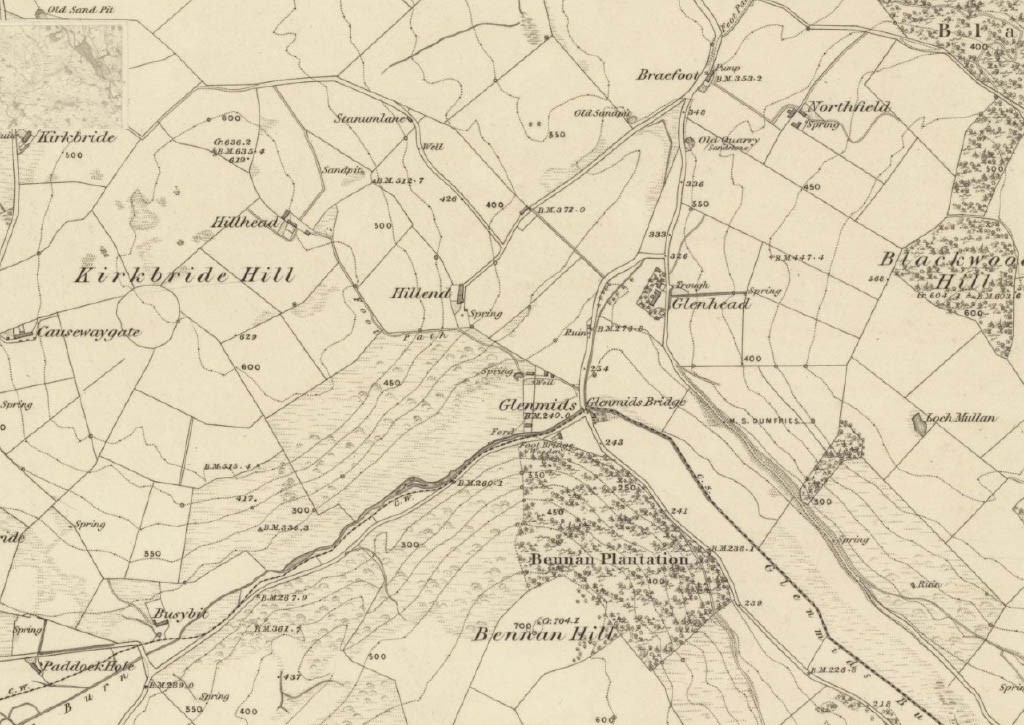
So I thought it might be a good place to go look for waxcaps and it turns out there is a good amount of them around! According to the Waxcap watch app, this means that the site is promising and we should carry on monitoring it over the next month or so.
Here’s a selection of the waxcaps I came across. As their name suggests, their cap is slightly waxy and slimy. They grow in rough, unimproved grasslands, which is a dwindling habitat as farming practices have tended to move towards spreading slurry, ploughing and reseeding pastures.
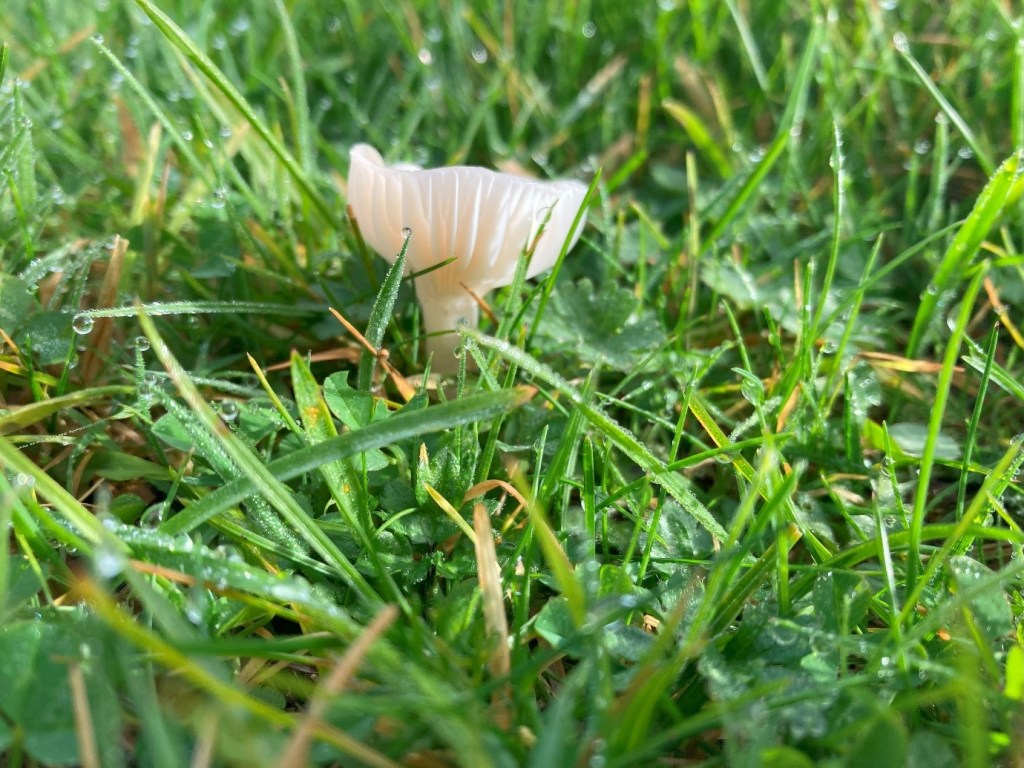
Snowy waxcap: By far the most commonly found on this survey. There were loads of them in the green field above Glenmidge. This field was very good for waxcaps and other grassland fungus.
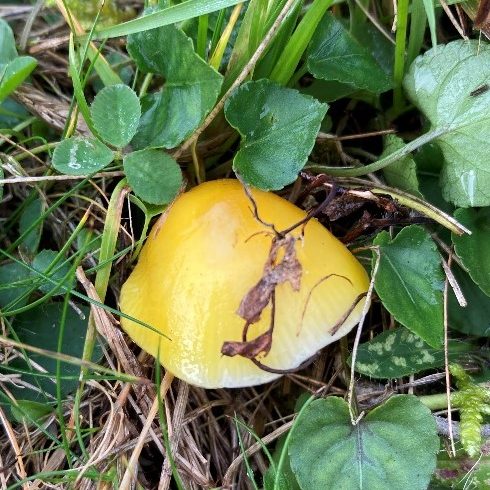
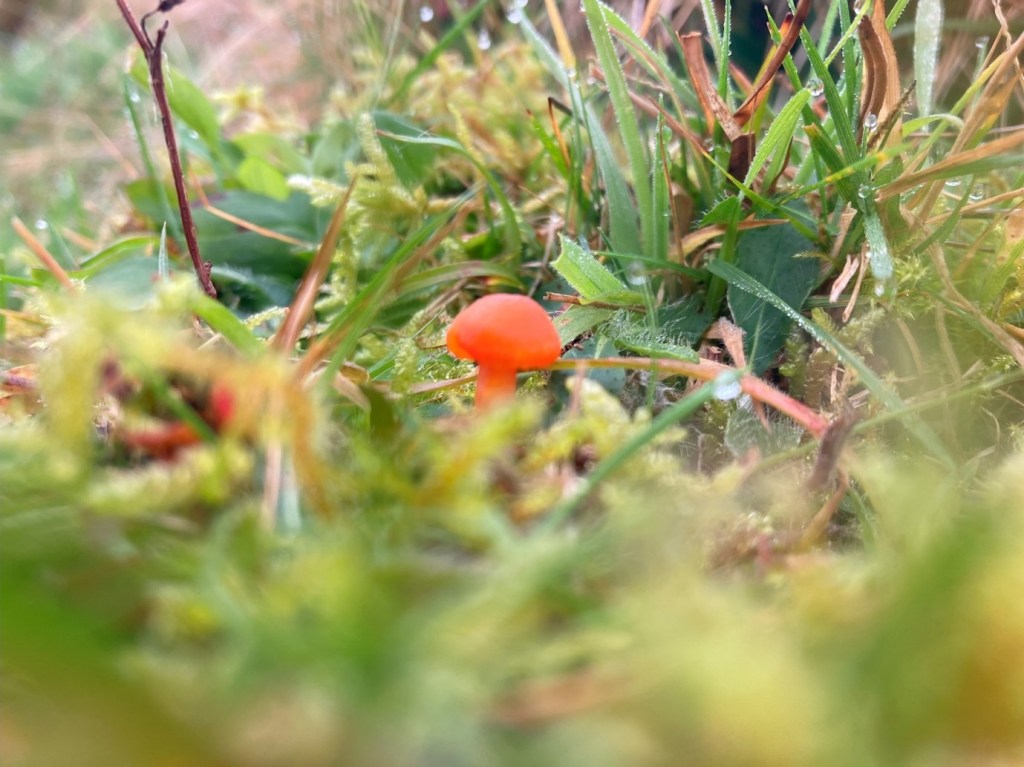
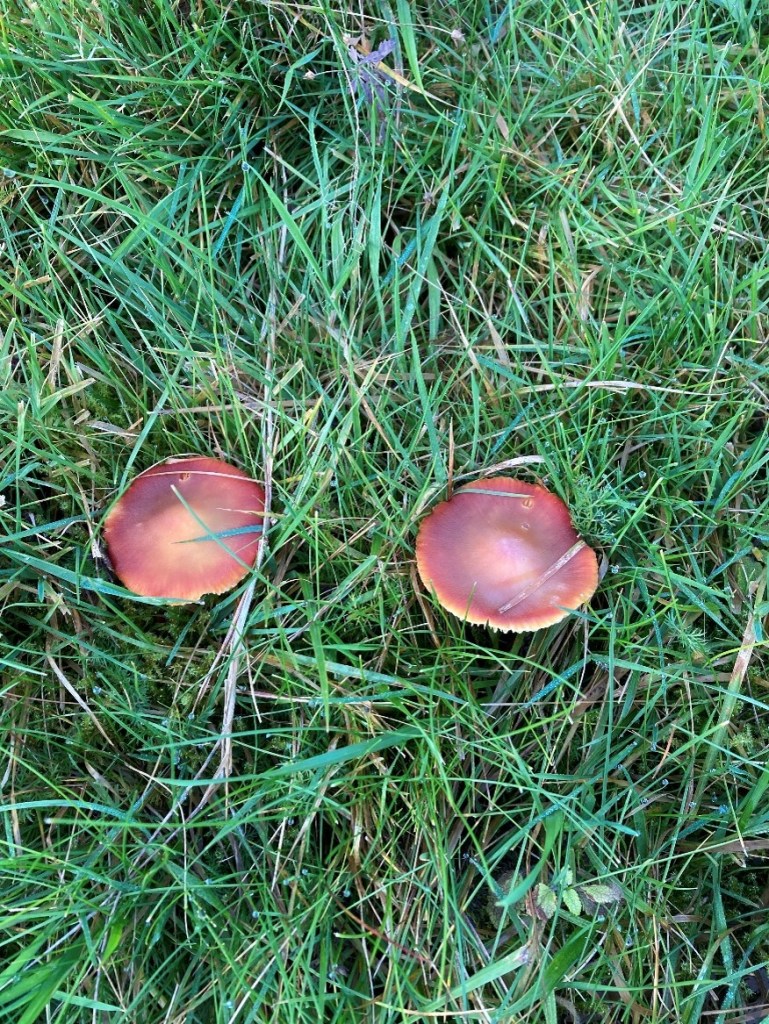
Parrot Waxcap: Always has some green in it to varying degrees. The green fades with age but there will always be a hint of it whether on the cap or the stipe or even the gills.
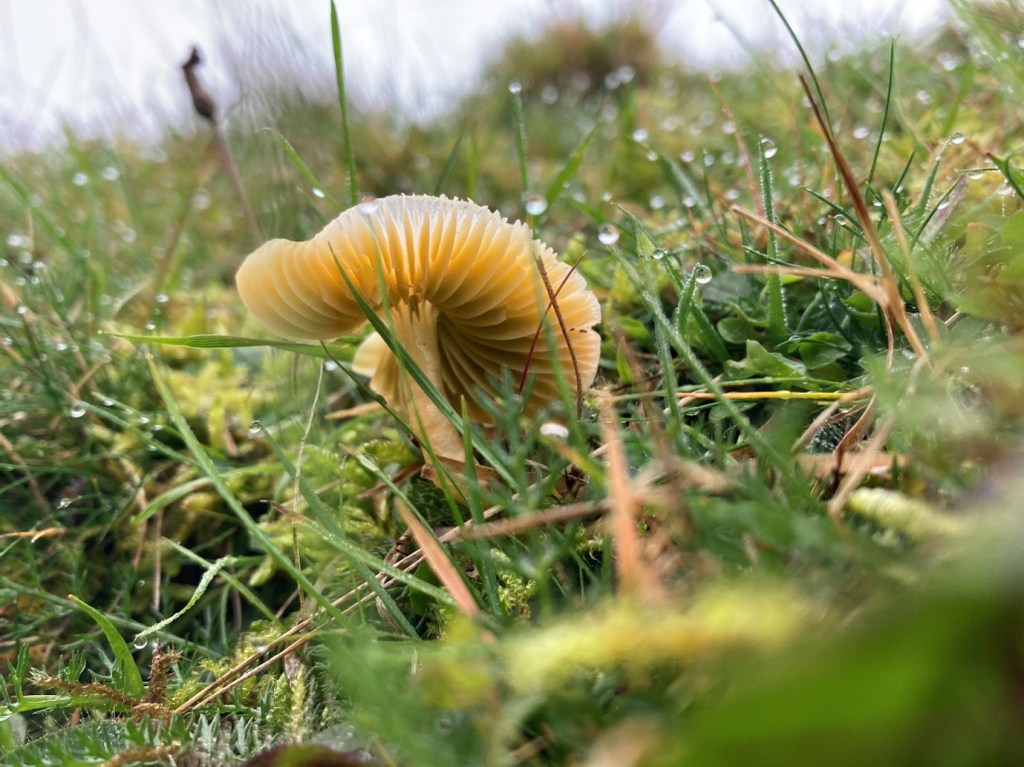
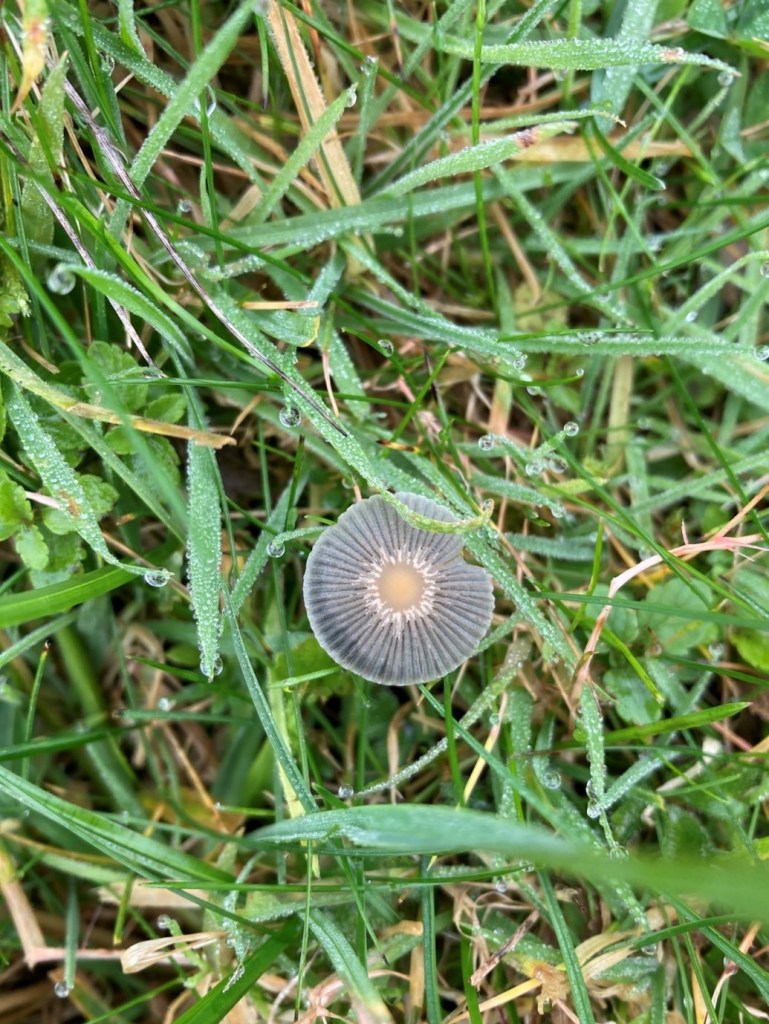
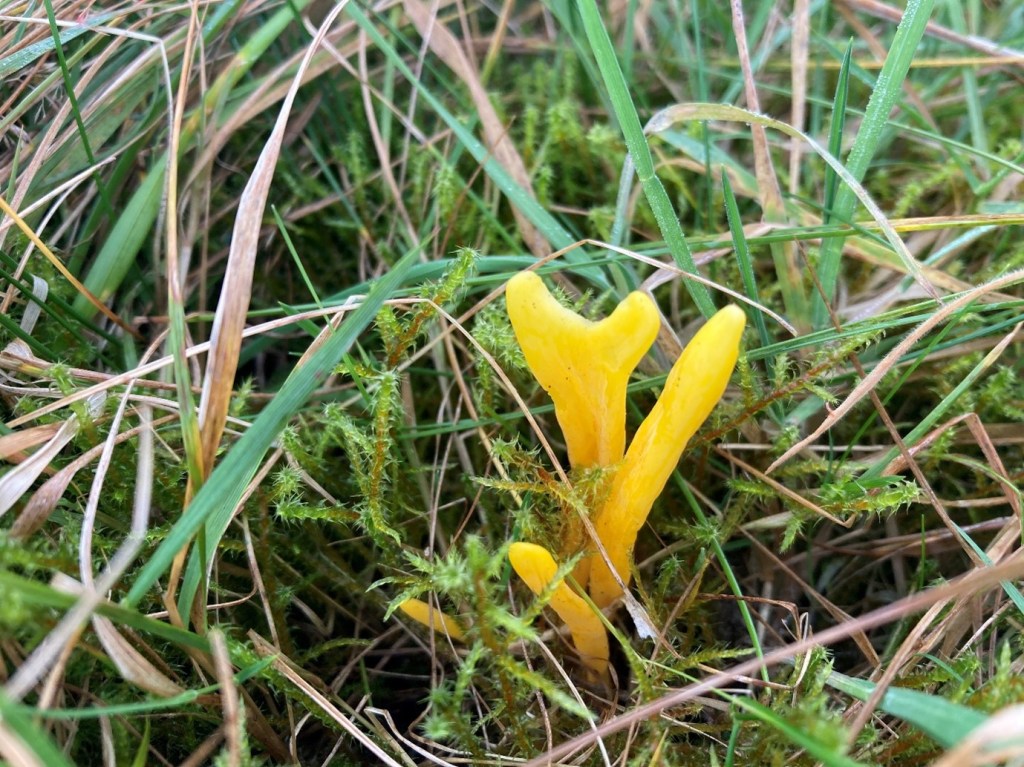
And then there are the other grassland fungi, like the cute pleated inkcap, the yellow clubs and more.
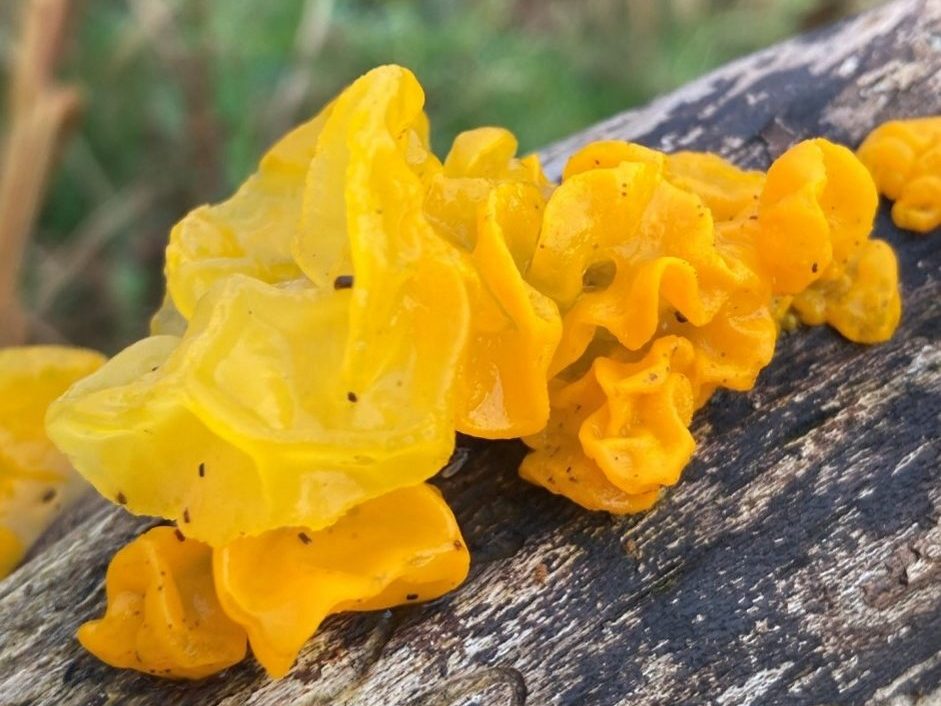
Other colourful fungus was found on dead broom such as the aptly named yellow brain.
Keep an eye out for a list of dates for surveys coming up!

