Notes on the Open Day

By Mark Zygadlo

A group of people standing in a line

Description automatically generated

The end of February may seem like a risky time to organise an outdoor event to reflect on the progress of the Glenmidge Burn Project based, as it is, in one of the wettest areas of Scotland. But we were very lucky: the 22nd of February was a perfect day in lots of ways.ย 

It is just over a year since the Project was incorporated as a SCIO and since it purchased some 30 acres of mixed land at Glenmidge so it seemed like a good time to host a gathering of the membership, friends and anyone interested to review our progress, thank those who have supported us and think about the future.

A group of people standing in a field

Description automatically generated

The day started with a morning of activity at Glenmidge. We split into two groups for an hour of soil sampling and worm counting for the first group and photography for the second. Then we rearranged ourselves and one group kick-sampled the burn and the other learnt about identifying trees in winter on the lower slopes of the hill. These simple activities are surprisingly rewarding and engaged us all in a shared sense of wonder at what lies just out of sight. Despite the apparent simplicity of digging up a cube of earth and sifting through it to identify and count earthworms, the information gleaned about the condition of the soil is fascinating.

A group of men looking at a sample

Description automatically generated

It’s also infectious, in the non-medical sense, and by the time we arrived at Keir Hall for lunch everyone was full of enthusiasm for what we had seen and learned. 

A tasty soup and sandwiches follower by tea, coffee and baking was provided by the Three Village Cafรฉ (a community enterprise in Penpont set up by the KPT) was much appreciated by all and was followed by a series of presentations about the project.

  • Introduction and background from project chair, Mark Zygadlo.
  • Senga Greenwood from the D&G Climate Hub, which has generously supported the project and sponsored this event, gave a concise description of their work.
  • Dave Kirby, project Trustee, showed pictures he has been taking regularly from the same spots on the project for over six months revealing a fascinating record of seasonal and longer term changes.
  • Trustees Antoine Lemaire and Dr Michael Muir described the way information from baseline and other specialised surveys has been put together to map the various habitats of the site, how all this information is stored and shared and, most important, how it informs our understanding of the land itself and its ecology.

We were then entertained by a series of short talks by partnering projects.

  • McNabb Laurie told us about D&G Woodlands and the Native Wild Apple project which the GBP contributed to.
  • Malcolm Haddow described the exemplary work of SWSEIC (South West Scotland Environmental Information Centre.)
  • John and Ben, the famous double act, described the work of NithLife.
A group of people sitting in a room

Description automatically generated

A Q&A session developed into a very interesting conversation, which some of the visitors with academic and practical experience in environmental projects initiated, into how very unusual the Glenmidge Burn Project is. Unlike the many larger environmental organisations working towards more specific issues like education, community engagement or large scale โ€˜rewildingโ€™ projects, a small-scale operation such as ours is extremely valuable because we are entirely free of obligations. So many projects set out with huge financial burdens, contractual agenda determined by funders or time-related targets for species reintroduction or increase. We have none of these. We are able to engage the land itself as an organic guide to the direction and development of the project.

Significant in this context are the connections we have made with other environmental groups, like SWSEIC and the University of Glasgow, whose knowledge and experience supports our work and to which we contribute data. 

Conversations like this are invaluable because they offer us a fresh and objective view of ourselves and our project. So, our heartfelt thanks to all who came along and made the day perfect.

ย And special thanks to the D&G Climate Hub who sponsored and co-hosted this event, Thornhill Community Transport, Keir Village Hall, the KPT and to all the organisations which support us and contributed to the day.
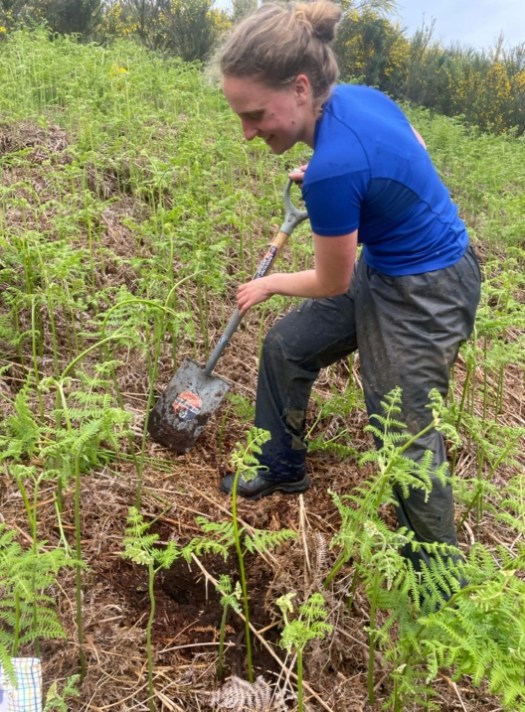
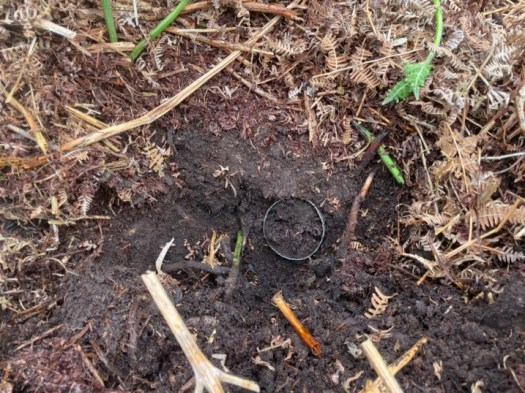
Super Soil

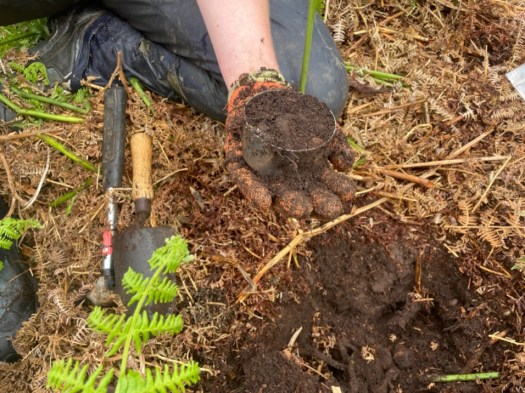
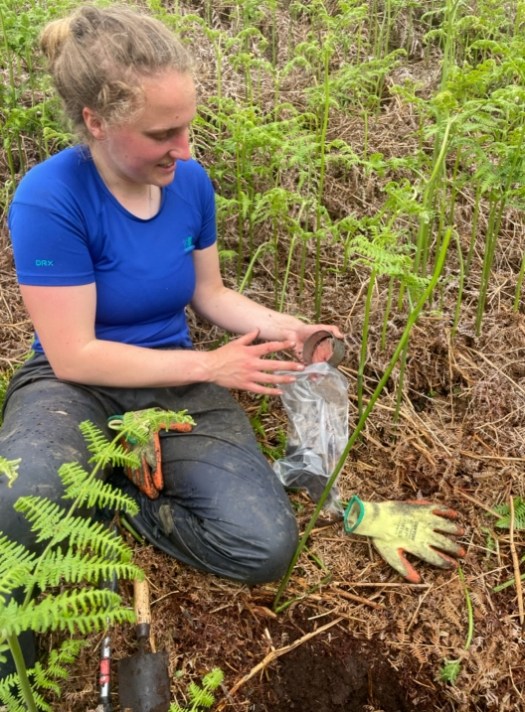
Alice is from the University of Glasgow and is carrying out a project on our land investigating the soil.

Alice digs a shallow hole in a recorded location.
She pushes a short metal cylinder measure into the ground.
Cylinder provides an equal volume of soil from each location
Each sample is bagged, numbered and sealed, and taken to the lab for analysis.

Wonderful Waxcaps

By Antoine Lemaire

Last Saturday, I went out to carry out a fungus survey on the ground along the burn. What a beautiful day it ended up being, despite a foggy and cloudy start! The aim was to take part in Plantlifeโ€™s Waxcap Watch, a citizen science project aimed at recording grassland fungus species. Waxcaps are beautiful, colourful mushrooms and it can sometimes look like a child has tossed their Legos across the field!ย ย 

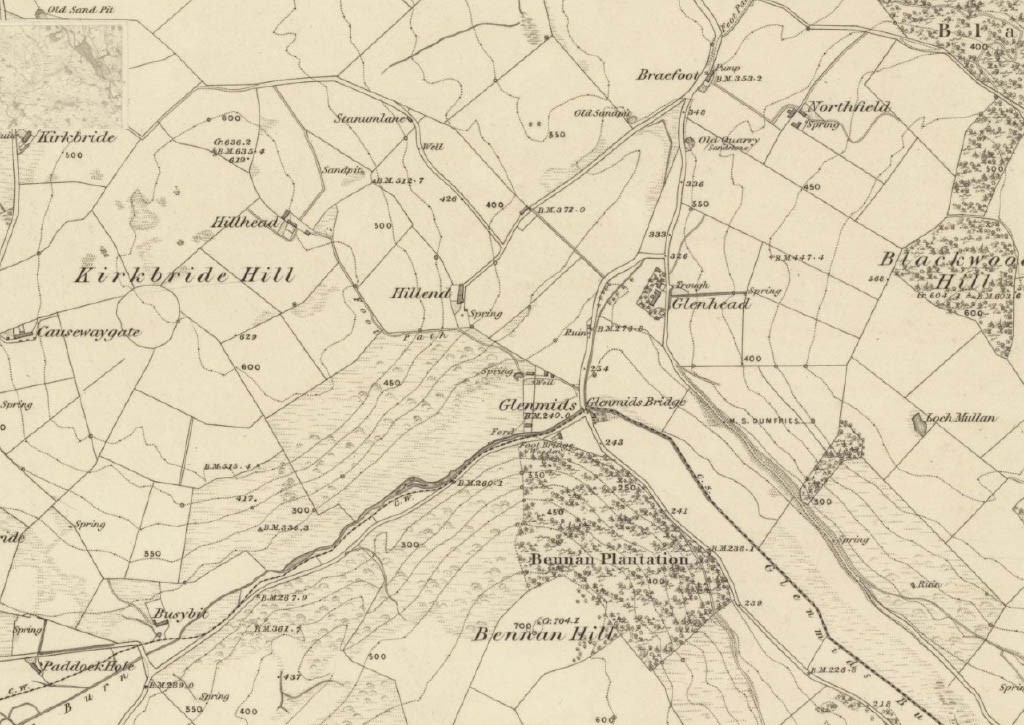
The land on Kirkbride Hill and around has been used for grazing for a long long time. The land, including the steep hillside, is shown to be a meadow on the 1856 Ordnance Survey map.ย ย 

1856 Ordnance Survey Map of Kirkbride Hill

So I thought it might be a good place to go look for waxcaps and it turns out there is a good amount of them around! According to the Waxcap watch app, this means that the site is promising and we should carry on monitoring it over the next month or so.ย ย 

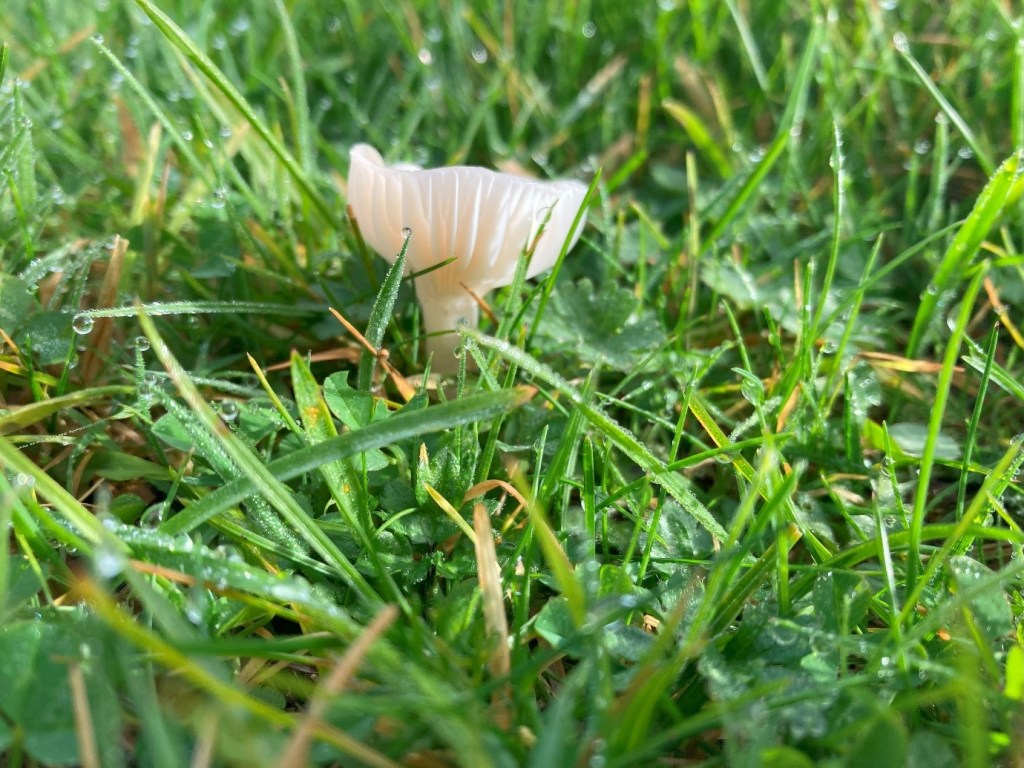
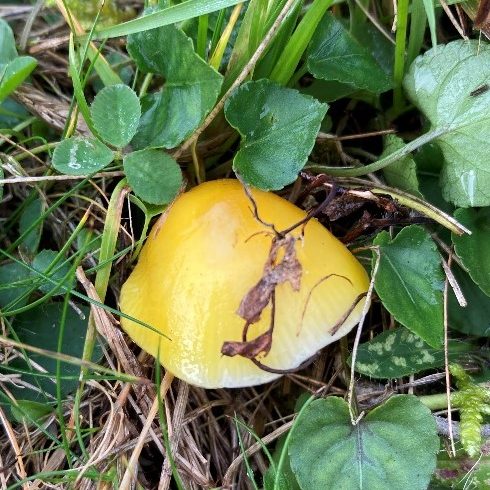
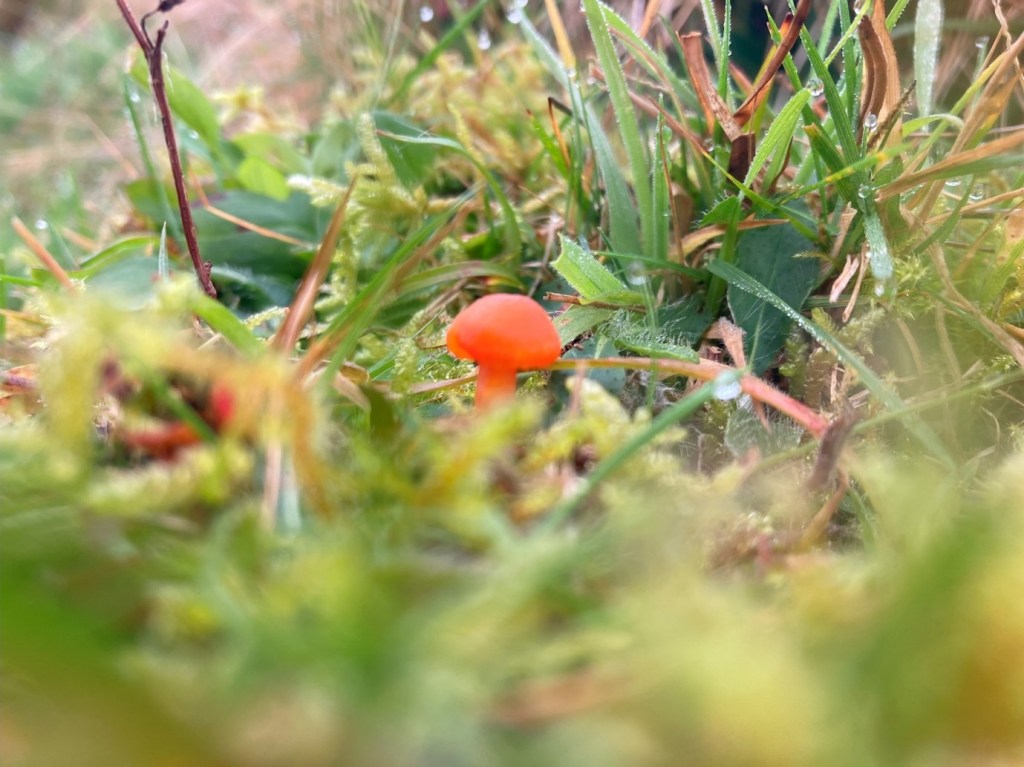
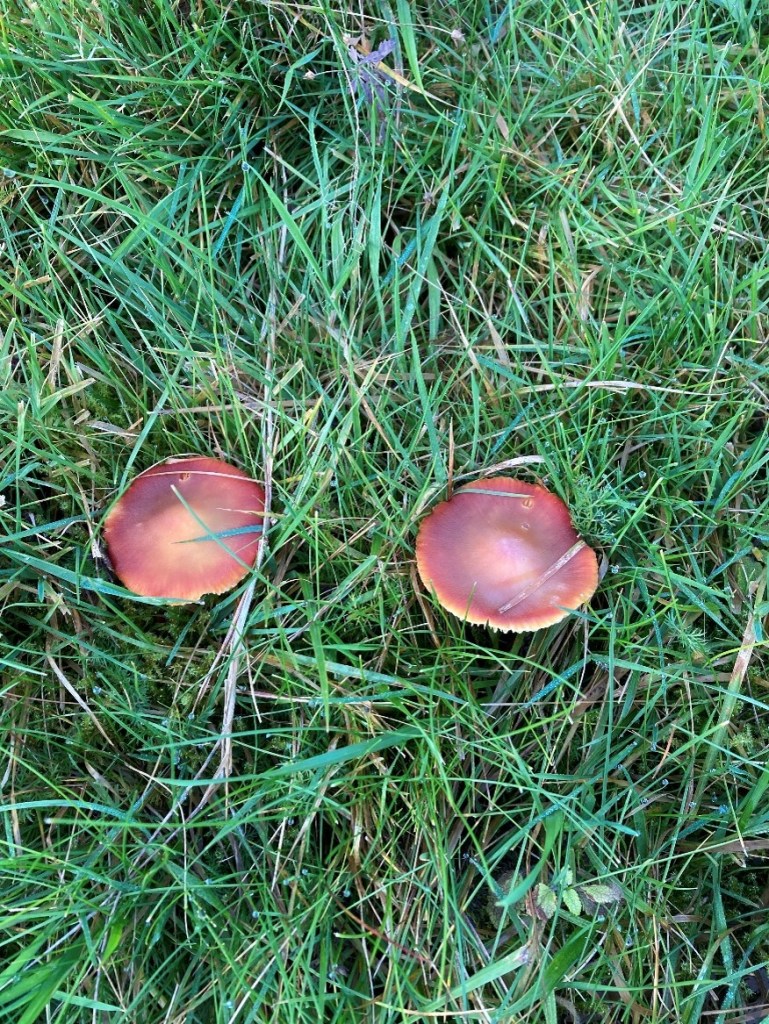
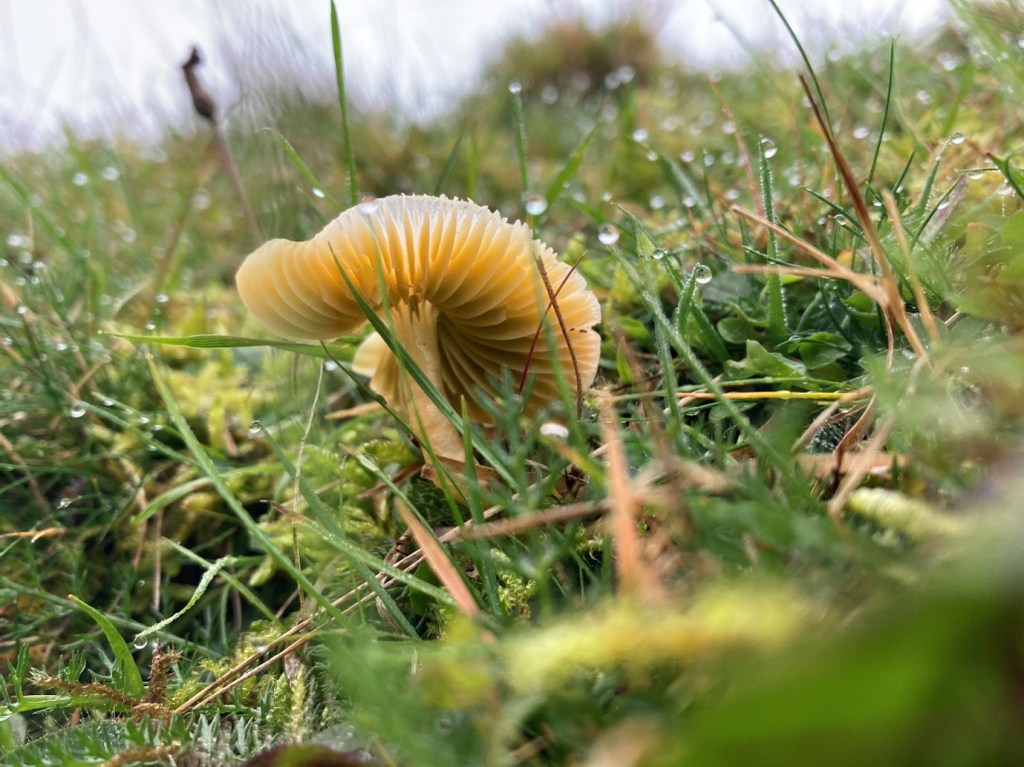
Hereโ€™s a selection of the waxcaps I came across. As their name suggests, their cap is slightly waxy and slimy. They grow in rough, unimproved grasslands, which is a dwindling habitat as farming practices have tended to move towards spreading slurry, ploughing and reseeding pastures.ย ย 

Snowy waxcap: By far the most commonly found on this survey. There were loads of them in the green field above Glenmidge. This field was very good for waxcaps and other grassland fungus.ย 

golden waxcap

Parrot Waxcap: Always has some green in it to varying degrees. The green fades with age but there will always be a hint of it whether on the cap or the stipe or even the gills.ย ย 

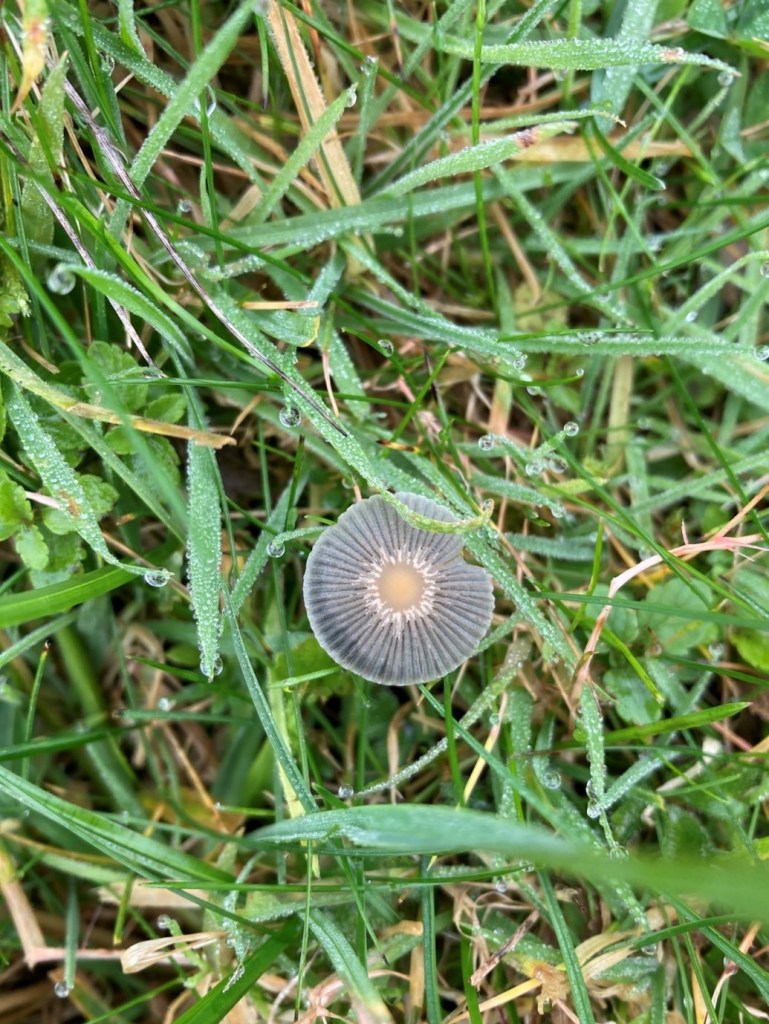
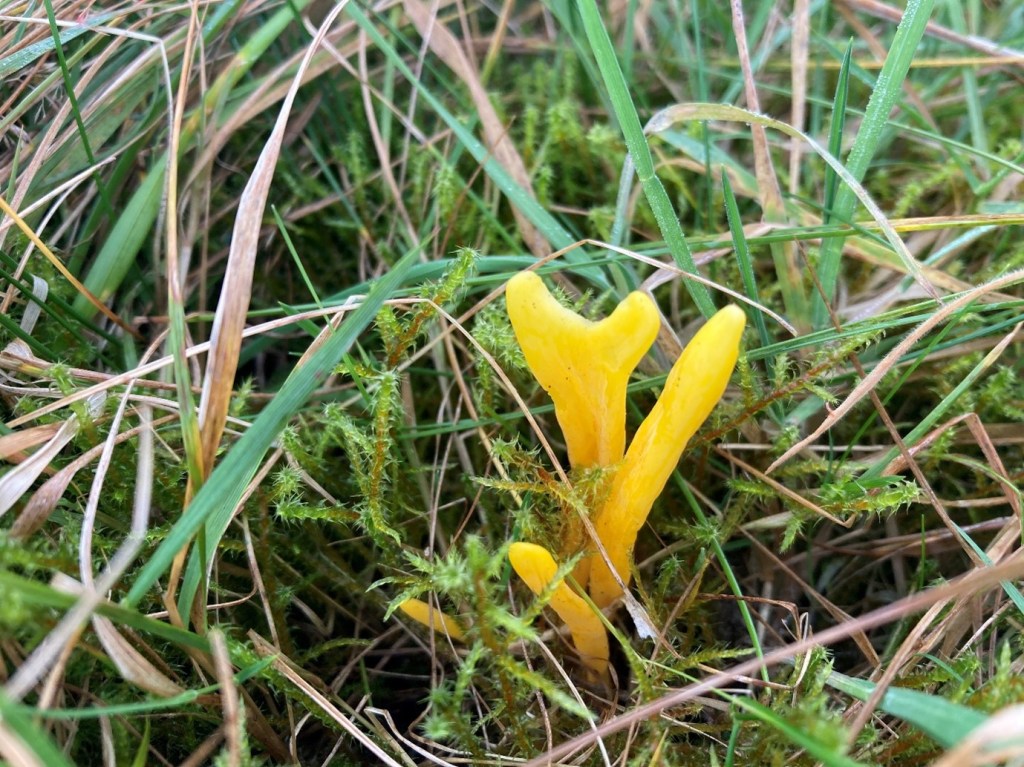
And then there are the other grassland fungi, like the cute pleated inkcap, the yellow clubs and more.ย ย 

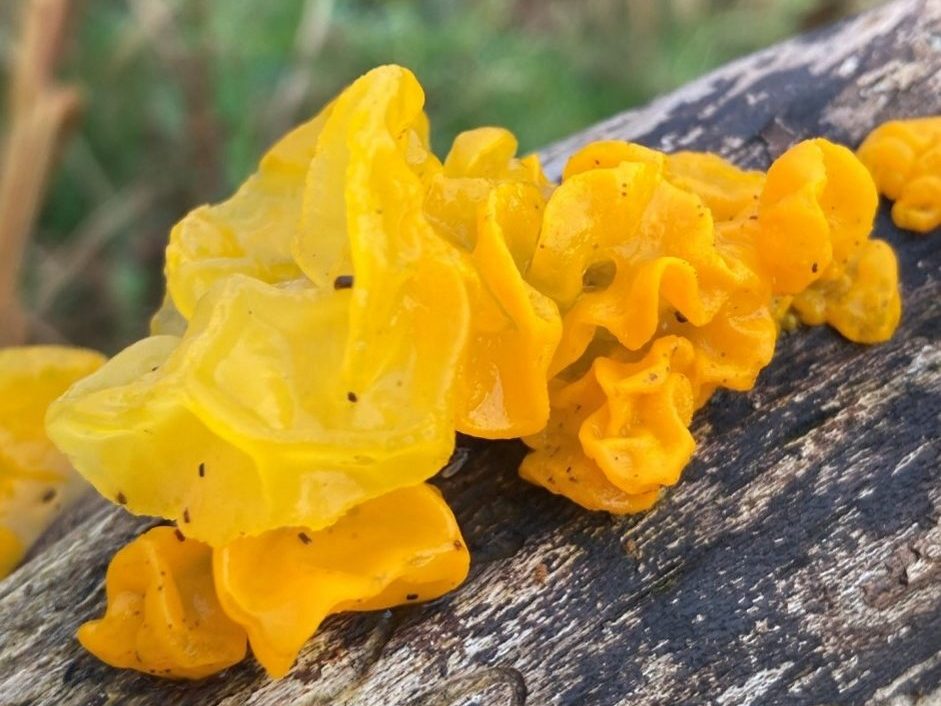
Other colourful fungus was found on dead broom such as the aptly named yellow brain.ย ย 

yellow brain

Keep an eye out for a list of dates for surveys coming up! 

Camera traps along the burn

By Antoine Lemaire

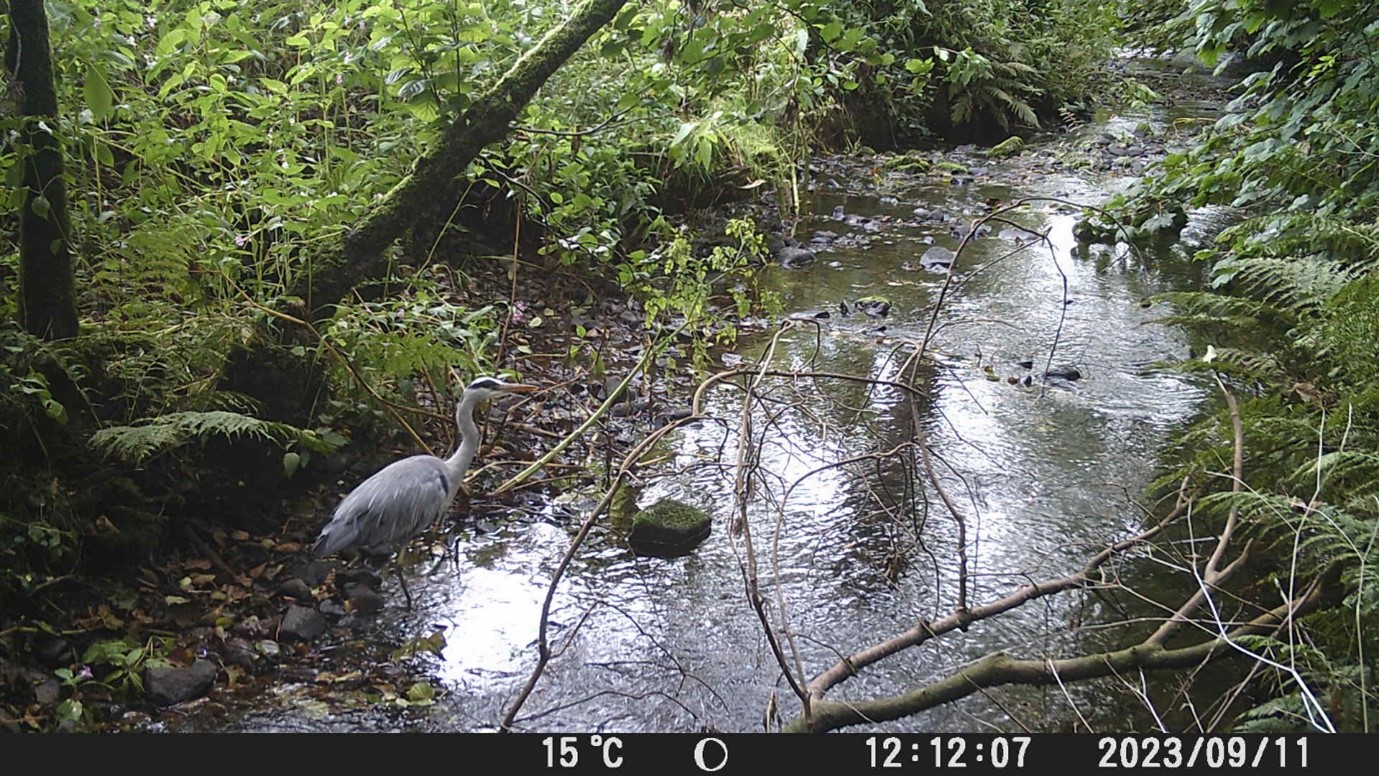
As part of surveying the Glenmidge Burn and adjacent land, four trail cameras have been set up in various places. Three of them were lent to us by the South West Scotland Environmental Information Centre. It has been great to read the land and the whispers of trails in order to make sure the cameras would catch glimpses of wildlife along the burn.

Lots of trial and error, but we got some fun footage in the end. The changing water levels however, have also given us some grief. At the foot of the burn, by the Nith, although it was set about 6 feet above the water, the camera came close to being submerged in September. Another camera set in a low-lying area was not so lucky. When I arrived to retrieve the data, the area was unrecognisable. Where there was nothing but trees and crunchy dead leaves in the summer, there was now only water. I had to wade in, it was very cold, and it just kept getting deeper. By the time I got to the first trees, the water was up to my chin! I was struggling to recognise which submerged tree I had fixed the camera to, but I eventually found it 3 feet under the surface. Luckily it was a balmy day and I warmed up quickly once I was out!

These pictures were taken ten days apart! Look at how high the water is.

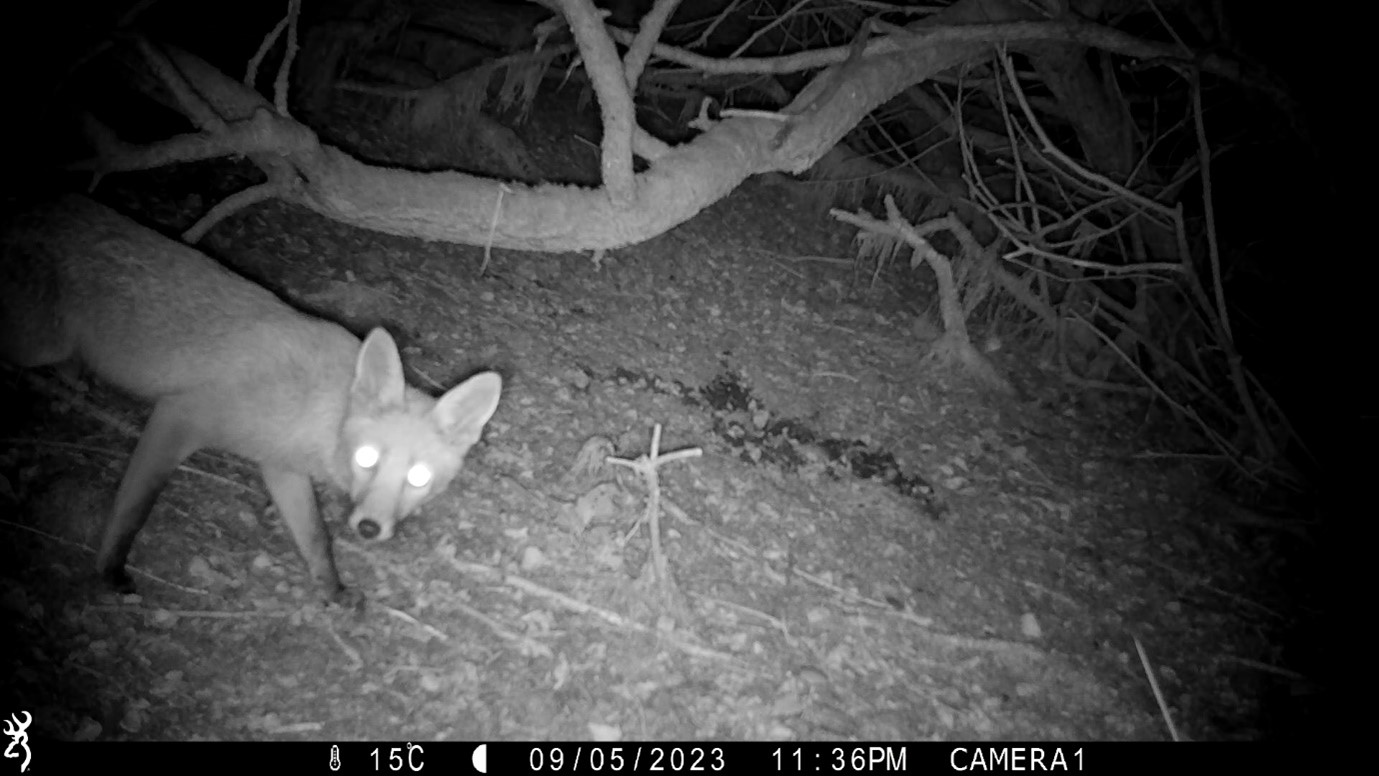
Foxes seem to be aware of the camera – possibly the sound of the mechanism when it is triggered.

You can check some footage on our Youtube channel.

Our first WeBS survey

By Mark Zygadlo

At ten oโ€™clock on a damp Saturday morning, Antoine and I set off to the foot of the Glenmidge Burn where it issues into the Nith. It has been raining for the last few days and the water levels are high. The milky tan water surges over most of the island and backs up the burn almost as far as the culvert under the main road. We retrieve a camera from a tree at the burn side noticing that the debris left by the flood last winter is a good six feet above where the camera was attached. A shocking perspective. A week before, a camera had been submerged in the rising water of a pond and though the memory was intact (mostly deer), the camera itself was not. We donโ€™t want to lose another.

As soon as we think about the WeBS job in hand, a pair of kingfishers flash past us heading upstream and then another, possibly one of the pair, heads back again. Two minutes later, a goosander paddles out of its overhanging cover and, very cleverly, keeps a large tree in the line of sight between us as we approach. We havenโ€™t even made a hundred yards yet.

A brilliant start but itโ€™s another half mile before Antoine sees a dipper. The rest of the walk, another three miles perhaps, despite lots of birdsong through the woods and a woodpecker near Dardarroch, yields nothing more for WeBS. Never mind, we canโ€™t complain. Although the ground is sodden, the rain stays off and, as always, a walk up the burn has a therapeutic effect, complemented by a nice cup of tea after the trudge up the last hill. 

WeBS is a national survey which individuals or organisation can help with. Itโ€™s a monthly check on the same area for wetland birds only and the data is shared with the British Trust for Ornithology.

https://www.bto.org/our-science/projects/wetland-bird-survey

We plan to cover two stretches of the Glenmidge Burn so, anyone interested to help the project, contact Antoine and we can arrange a rota.

Land for Sale – An opportunity for a community buy out!

The Glenmidge Burn Project is an Unincorporated Community Association focussed on the ecology of land along the Glenmidge Burn, part of which is in the Keir CC area. We have an open membership of 40+, we carry out Phase 1 Baseline surveys, identifying habitats and sharing data with SWSEIC. We present open citizen science events and work with other environmental organisations, Glasgow University, Unesco Biosphere etc.

Last week, an area of land we have just started surveying, immediately upstream of the village of Glenmidge, was put up for sale.

https://www.cdrural.co.uk/property/land-at-hillhead-hillhead-farm-dumfries-dg2-0ts

Sale of this land is an environmental risk but is also a huge opportunity. It is poor land for farming (LFA) but it contains diverse and very interesting habitats in which there will be at-risk species. Depending on who buys it, it could be built on, it could be added to a shooting beat, it could be planted with Sitka, or it could simply be bought by an investment fund. It is also attractive to absentee buyers which could exclude the community and the project from it to a greater or lesser extend. 

The Glenmidge Burn Project is prepared to lead a community purchase to secure it for the community, give it an environmental role in an intensively farmed area and a sustainable role as a community amenity.

You will see that there are two lots. The larger, Lot 2, is of more environmental interest but Lot 1 provides space for making the project more self-sustaining which in turn offers the prospect of employment

We would like to host a community meeting to gauge support, listen to ideas and explore all avenues for raising the funds in the time available.

Suggestions for the land as a community asset may include combinations of:

  • environmental protection,
  • public access and engagement in its maintenance and development.
  • site of detailed scientific research,
  • re-establish a wetland which may have a beneficial impact on flooding,
  • creating a broadleaf woodland,
  • various forms of sustainable business; tree nursery, community growing
  • young peoplesโ€™ engagement, education and training in the field.
  • a community/project/environmental centre

Please get in touch with your ideas, to show support or to let us know what you think of the idea!

Public drop in sessions are being held to gather your ideas and opinions so come along to share your thoughts and learn more.

Keir village hall: Mon 4th Sep at 6pm – 7pm

Auldgirth village hall: Tue 5th Sep at 6pm – 7pm

The Flying Pig, Dunscore: Thu 7th Sep, 6pm – 7pm

Community land ownership only works with local support so show up to show yours. It can happen!

We’ve got funding!

by Marianne Nicholson

For many, attending a community council meeting is probably a bore but when I went along with Mark on the 17th of July to the Keir CC I found I actually got a bit of a thrill out of it.

Mark came and picked me up on Monday evening and we drove down to the village hall together. It was a bright sunny day and I was a bit nervous. It was the first such meeting I had ever attended and I wasnโ€™t sure what to expect.

When we arrived there was a group of young children in football strips and their parents. The council were taking pictures with the team because they had funded them and wanted to celebrate the news. The kids were excited and their parents grateful and it felt amazing to see what the community council could do.

The children headed off and we were ushered into the hall to begin the meeting.

We introduced ourselves and the council invited us to talk first. Mark started us off by explaining where we were based and what the aims of the project are. I then interjected with mention of our education aims: how we are keen to involve the local community and help them learn more about the area that they live in.

We ended by showing them the map of the area and explaining why we wanted the money: to pay for the website, insurance and first aid kits (boring but essential!).

The reception from the Keir CC seemed extremely positive. Weโ€™d been given pointers about applying for the funding, an offer of them sharing any of our events, and theyโ€™d asked all the right questions. We said goodbye and got back into Markโ€™s car.

He applied the next day using the form they gave us and within the week they confirmed weโ€™d received the funding!

For me, what was so special was being able to be a part of government at its smallest level. It felt incredible being able to influence the people with the money that will actually make such a difference to our little project.

Mark’s recipe for a successful BioBlitz: moth trapping, kick sampling and a large scoop of fascination

By Mark Zygadlo

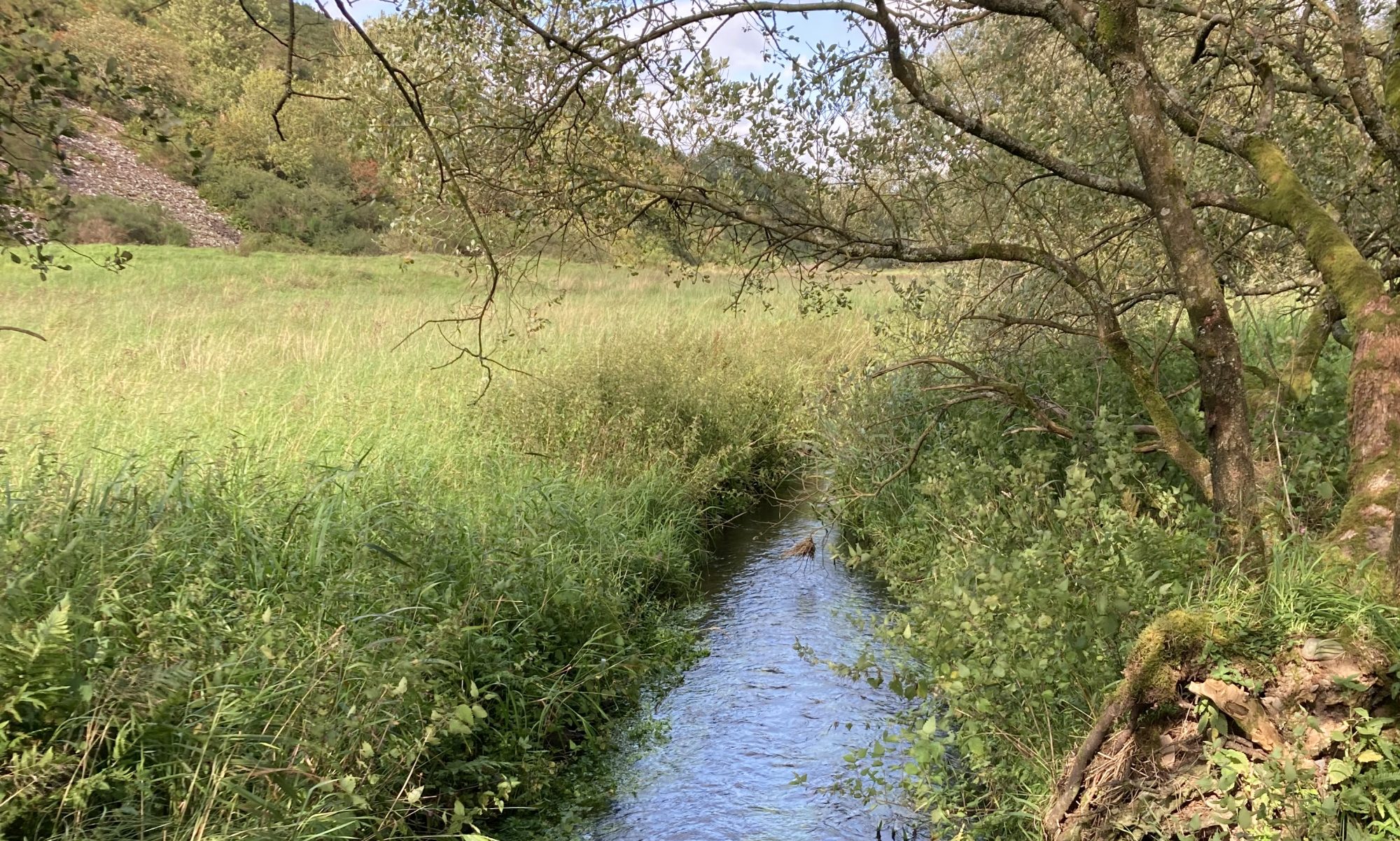
The absence of rain over the last month has left the Glenmidge Burn pretty low but strangely enough, even though the catchment is quite small and the burn is short, I have never known it dry up altogether. One theory is that the sandy, gravelly, drumlined area above the Lag is an enormous underground reservoir which feeds the Glenmidge to the east and the Birkshaw Burn to the west. Itโ€™s a theory which will be tested in the coming weeks if this drought continues.ย 

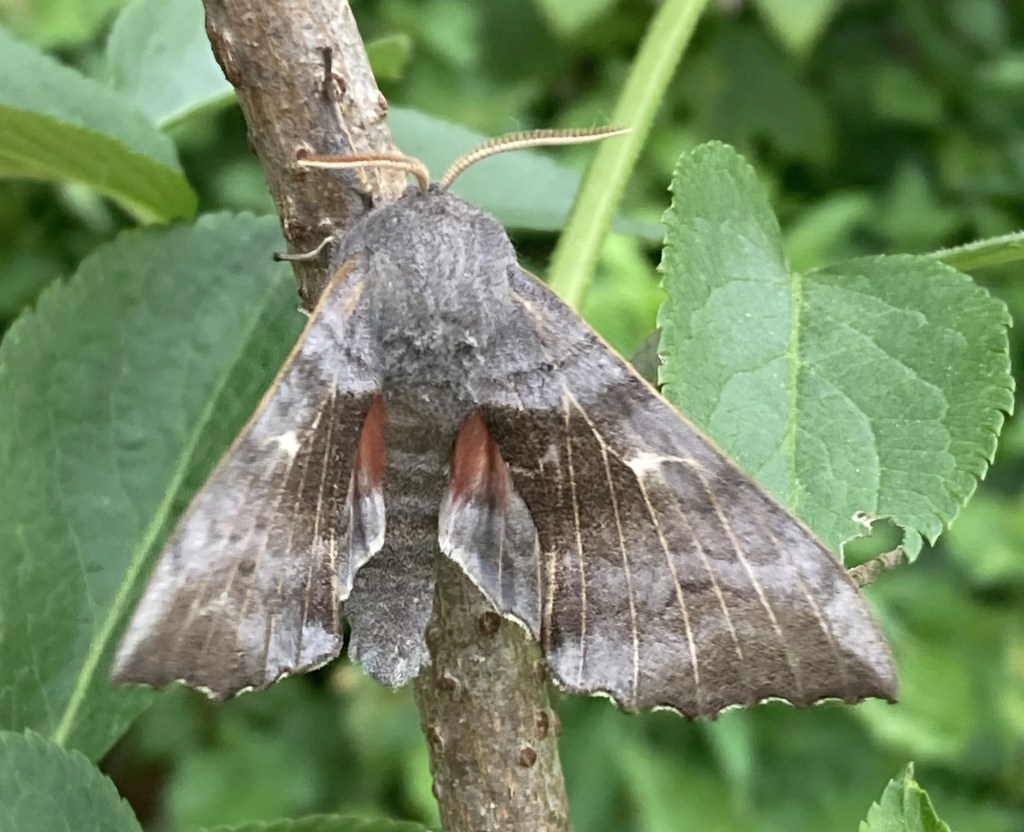
Image of a poplar hawkmoth by Antoine Lemaire

At the beginning of this dry spell, a memorable Saturday morning was spent at Hillend. Despite the unfortunate name, BioBlitz, the twenty-odd folk who attended gained a spellbinding insight into the secret life of our environment. Malcolm, an entomologist from the Galloway and South Ayrshire UNESCO Biosphere, and I had set a pair of moth traps the evening before. We huddled around as he opened them revealing a dazzling variety of exquisite moths, armies of beetles and a host of other beautiful nocturnal insects. Maybugs dozily crawled about our hands, opening and closing their fern-like antennae. A carrion beetle had half a dozen peach-coloured mites carried on its back, keeping its body clean and which, apparently, guide it towards its next meal. 

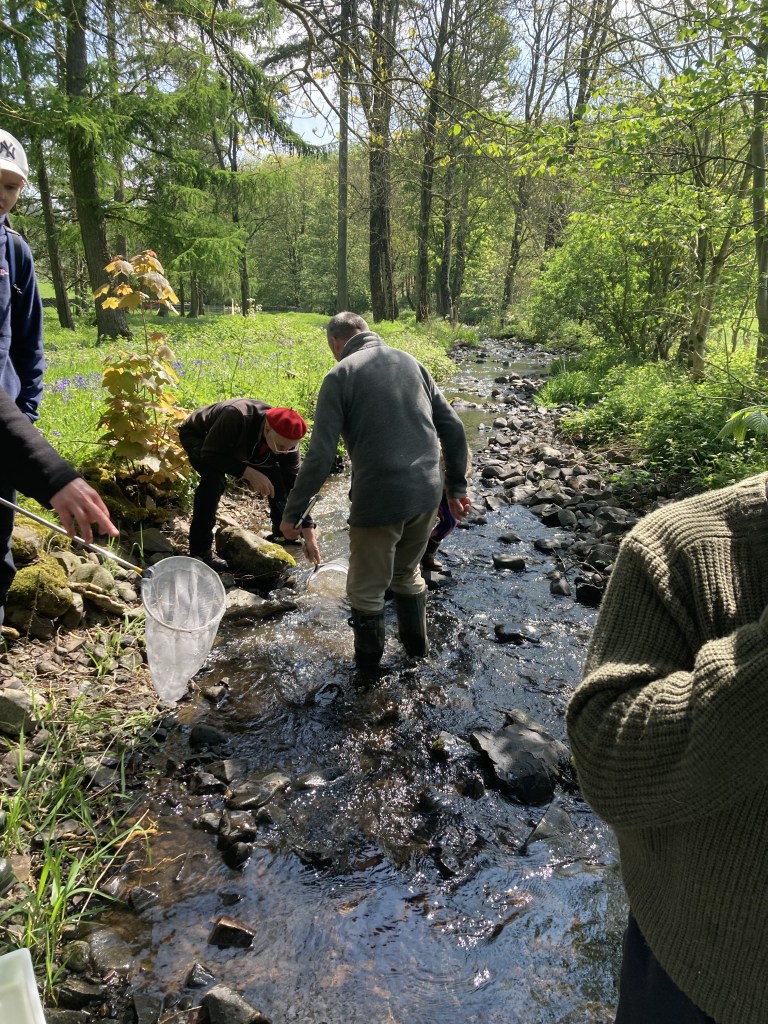
Image of kick sampling by Antoine Lemaire

Further downstream, Malcolm demonstrated โ€˜kick samplingโ€™ which, as the name suggests, disturbs the bed of the burn and catches all the beasties in a net so you can analyse a sample of the burn creatures. In a shallow tray of water another fascinating collection: mayfly nymphs worthy of a sci-fi movie, worms so fine youโ€™d mistake them for hair, caddisfly nymphs with architectural defences, a strange worm making convulsive S shapes to move about. Citing their latin names from memory, Malcolm detailed the peculiar wonder of their metamorphoses, which I still struggle to believe. The journey these organisms take from juvenile to adult is truly bizarre. 

In our group, there were perhaps six examples of  juveniles of the homo sapien species, which will develop into adults by a simple increase in size over their lifespan. Yet, here we all are, up to our wellie tops in the burn, crouching over sample trays, sharing magnifying lenses and an incredulous amazement at the brilliant and strange variety of the world right under our noses.

โ€“ โ€“ โ€“ โ€“ โ€“ โ€“ โ€“ โ€“ โ€“ โ€“ โ€“ โ€“ โ€“ โ€“ โ€“ โ€“ โ€“ โ€“ โ€“ โ€“ โ€“ โ€“ โ€“ โ€“ โ€“ โ€“ โ€“ โ€“ โ€“

If interested in contributing to the blog, please send an email to glenmidgeburnproject@gmail.com.

A Sunday morning well spent

By Mark Zygadlo

It is a cold and drizzly Sunday morning, typical of this spring. Seven of us meet in a muddy lay-by near the Halliday Hill roadend. We change into wellies and waterproofs before venturing into the undergrowth with pencils, pads and reference books at the ready. This is the fifth survey session of the Glenmidge Burn Project and although I have lived only five minutes walk from this spot for over thirty years, I have never been here before. It is densely wooded and impenetrable in some parts. 

We split into groups and make parallel transects from the road to the burn about 50 yards apart. We find three distinct habitat types. Next to the road is 15-year-old mixed broadleaf plantation. Sitka spruce of the same age occupies the middle part. In the final section, dense poplar regrowth from a plantation felled about 15 years ago. Itโ€™s a pattern that seems to extend as far as Barndarroch, about a kilometre downstream.

We are making a baseline habitat survey of the area but even on a single walk-through like this, we pick up other clues to its history and management. There is deciduous regrowth from much bigger, older tree-stumps in all three of the main habitats. Close to the village, there are also odd examples of garden escapees: a rhus, a cultivated honeysuckle. Along the burn, there is alder, willow, rushes and I almost tread on an enormous frog, all of which is predictable in wetland areas. Wood sorrel grows among the dense undergrowth of bramble, nettle and rosebay willowherb, suggesting a much older woodland once covered the whole site. Ancient woodland is a scarce habitat type home to communities of flora and fauna not found elsewhere and so is in desperate need of protection. 

Along this section, the burn is regulated by an enormous dead-straight dike. It has very obviously been confined along all of its upper reach: the opposite bank is built up with stone dredged out of it and it runs in unnaturally straight lines all the way to the Cuil Bridge.

At the burn, we meet up and compare notes. We are fortunate in this session to have professional expertise on hand. I am amazed by their exhaustive knowledge and the understanding with which the trained eye can pick out details that the novice, like me, misses. From beneath the skull of a perfectly polished sheepโ€™s skeleton, a red-breasted carrion beetle is picked up and turned over to reveal his identifying colour before being returned to the ground to carry on his work. This beetle is apparently quite rare and I am told that finding them here indicates an environment with high biodiversity. 

Trudging back up the hill, despite the water running into my boots, it feels like a morning well spent. I have remembered two important things: wood sorrel is an indicator of ancient woodland and the carrion beetle is a very good sign. 

– – – – – – – – – – – – – – – – – – – – – – – – – – – – –

If interested in contributing to the blog, please send an email to glenmidgeburnproject@gmail.com.