What do you get when you gather passionate people, a stretch of burn near Hillend, and a decent cup of coffee?
A very productive “Walk and Talk.”
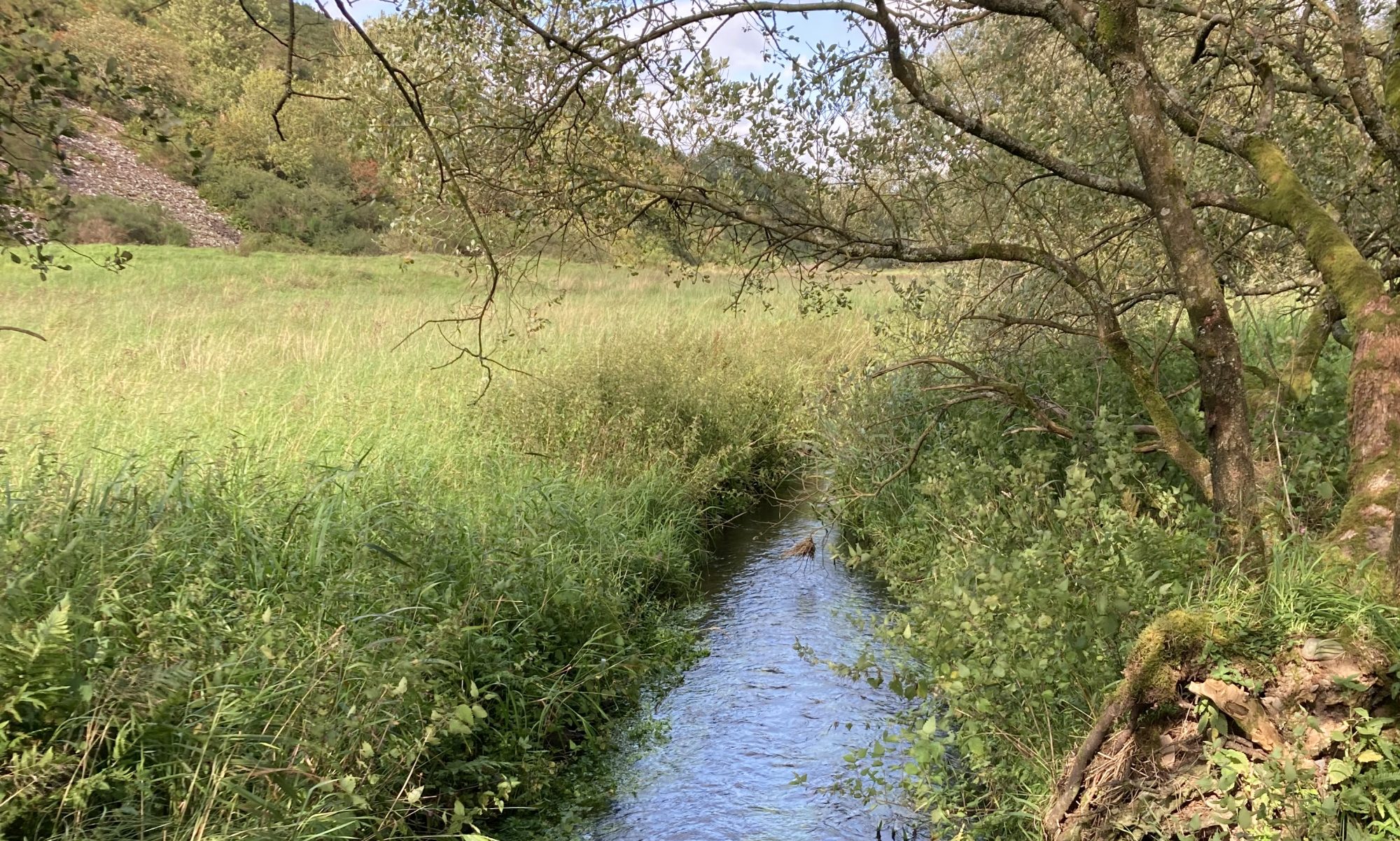
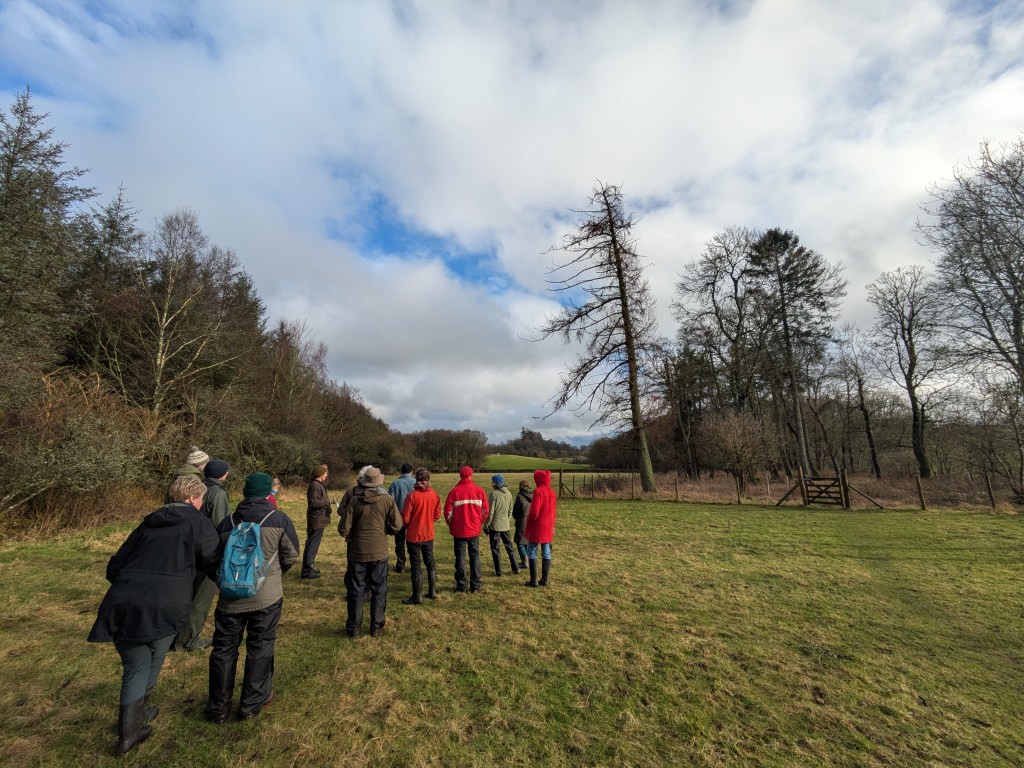
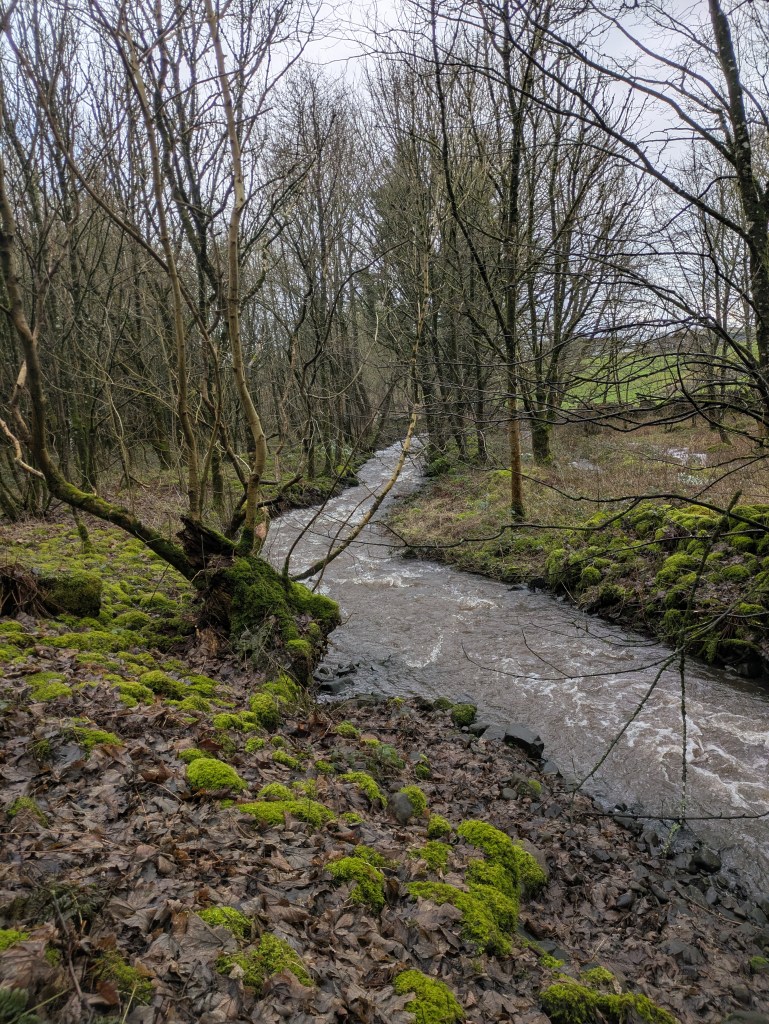
Last month, members and trustees of the Glenmidge Burn Project met for a relaxed walk along the lower stretch of the burn. It wasn’t just a stroll — it was a chance to see, in real time, what has already been done to improve biodiversity and support the health of the burn. There’s something special about standing beside the water and actually seeing conservation in action. No formal agenda. No PowerPoint. Just wellies, fresh air, and plenty of conversation.
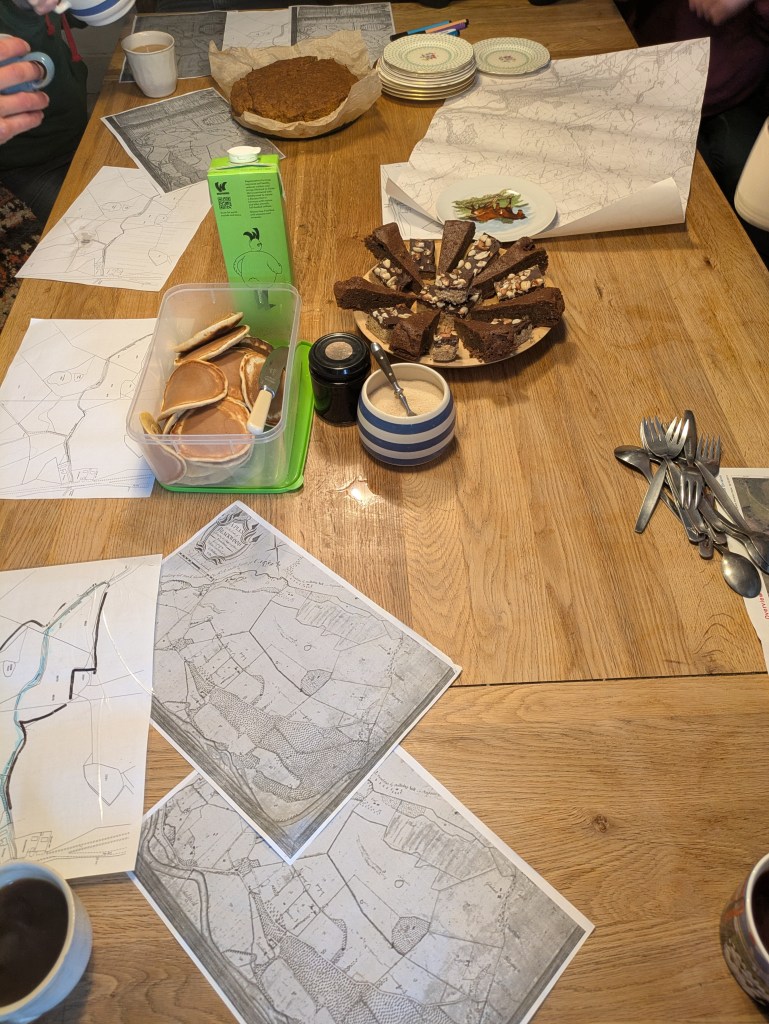
During the walk we looked at the landscape and how the burn interacts with the surrounding habitats. After the walk (and a fair bit of enthusiastic pointing at plants and fungi), we gathered for coffee and conversation. And that’s where the ideas really started flowing.
Some exciting suggestions came up – possibly helped by caffeine and cakes!
Creating a small wetland area
Establishing a native wildflower patch
Installing nest boxes
Exploring more ways to enhance habitats and attract biodiversity in a way that works for the landowner.
The conversation touched on both the hyper local features of the burn and the surrounding land use, the presence or absence of nature corridors and wider natural features. How can we work more closely with surrounding farmers and landowners? How can we encourage participation in a way that supports conservation without compromising their livelihoods?
Conservation works best when it works for everyone.
All in all, it was a simple walk that sparked meaningful conversations, practical ideas, and renewed motivation. Sometimes progress starts with putting one foot in front of the other — preferably along a burn on a good day.
I’m looking forward to seeing these ideas take shape.
Suhaschandra Hegde MSc Ecology & Environmental Monitoring University of Glasgow
The end of February may seem like a risky time to organise an outdoor event to reflect on the progress of the Glenmidge Burn Project based, as it is, in one of the wettest areas of Scotland. But we were very lucky: the 22nd of February was a perfect day in lots of ways.
It is just over a year since the Project was incorporated as a SCIO and since it purchased some 30 acres of mixed land at Glenmidge so it seemed like a good time to host a gathering of the membership, friends and anyone interested to review our progress, thank those who have supported us and think about the future.
The day started with a morning of activity at Glenmidge. We split into two groups for an hour of soil sampling and worm counting for the first group and photography for the second. Then we rearranged ourselves and one group kick-sampled the burn and the other learnt about identifying trees in winter on the lower slopes of the hill. These simple activities are surprisingly rewarding and engaged us all in a shared sense of wonder at what lies just out of sight. Despite the apparent simplicity of digging up a cube of earth and sifting through it to identify and count earthworms, the information gleaned about the condition of the soil is fascinating.
It’s also infectious, in the non-medical sense, and by the time we arrived at Keir Hall for lunch everyone was full of enthusiasm for what we had seen and learned.
A tasty soup and sandwiches follower by tea, coffee and baking was provided by the Three Village Café (a community enterprise in Penpont set up by the KPT) was much appreciated by all and was followed by a series of presentations about the project.
Introduction and background from project chair, Mark Zygadlo.
Senga Greenwood from the D&G Climate Hub, which has generously supported the project and sponsored this event, gave a concise description of their work.
Dave Kirby, project Trustee, showed pictures he has been taking regularly from the same spots on the project for over six months revealing a fascinating record of seasonal and longer term changes.
Trustees Antoine Lemaire and Dr Michael Muir described the way information from baseline and other specialised surveys has been put together to map the various habitats of the site, how all this information is stored and shared and, most important, how it informs our understanding of the land itself and its ecology.
We were then entertained by a series of short talks by partnering projects.
McNabb Laurie told us about D&G Woodlands and the Native Wild Apple project which the GBP contributed to.
Malcolm Haddow described the exemplary work of SWSEIC (South West Scotland Environmental Information Centre.)
John and Ben, the famous double act, described the work of NithLife.
A Q&A session developed into a very interesting conversation, which some of the visitors with academic and practical experience in environmental projects initiated, into how very unusual the Glenmidge Burn Project is. Unlike the many larger environmental organisations working towards more specific issues like education, community engagement or large scale ‘rewilding’ projects, a small-scale operation such as ours is extremely valuable because we are entirely free of obligations. So many projects set out with huge financial burdens, contractual agenda determined by funders or time-related targets for species reintroduction or increase. We have none of these. We are able to engage the land itself as an organic guide to the direction and development of the project.
Significant in this context are the connections we have made with other environmental groups, like SWSEIC and the University of Glasgow, whose knowledge and experience supports our work and to which we contribute data.
Conversations like this are invaluable because they offer us a fresh and objective view of ourselves and our project. So, our heartfelt thanks to all who came along and made the day perfect.
And special thanks to the D&G Climate Hub who sponsored and co-hosted this event, Thornhill Community Transport, Keir Village Hall, the KPT and to all the organisations which support us and contributed to the day.



 The Glenmidge Burn Project