
By Mark Zygadlo
It is a cold and drizzly Sunday morning, typical of this spring. Seven of us meet in a muddy lay-by near the Halliday Hill roadend. We change into wellies and waterproofs before venturing into the undergrowth with pencils, pads and reference books at the ready. This is the fifth survey session of the Glenmidge Burn Project and although I have lived only five minutes walk from this spot for over thirty years, I have never been here before. It is densely wooded and impenetrable in some parts.
We split into groups and make parallel transects from the road to the burn about 50 yards apart. We find three distinct habitat types. Next to the road is 15-year-old mixed broadleaf plantation. Sitka spruce of the same age occupies the middle part. In the final section, dense poplar regrowth from a plantation felled about 15 years ago. It’s a pattern that seems to extend as far as Barndarroch, about a kilometre downstream.
We are making a baseline habitat survey of the area but even on a single walk-through like this, we pick up other clues to its history and management. There is deciduous regrowth from much bigger, older tree-stumps in all three of the main habitats. Close to the village, there are also odd examples of garden escapees: a rhus, a cultivated honeysuckle. Along the burn, there is alder, willow, rushes and I almost tread on an enormous frog, all of which is predictable in wetland areas. Wood sorrel grows among the dense undergrowth of bramble, nettle and rosebay willowherb, suggesting a much older woodland once covered the whole site. Ancient woodland is a scarce habitat type home to communities of flora and fauna not found elsewhere and so is in desperate need of protection.
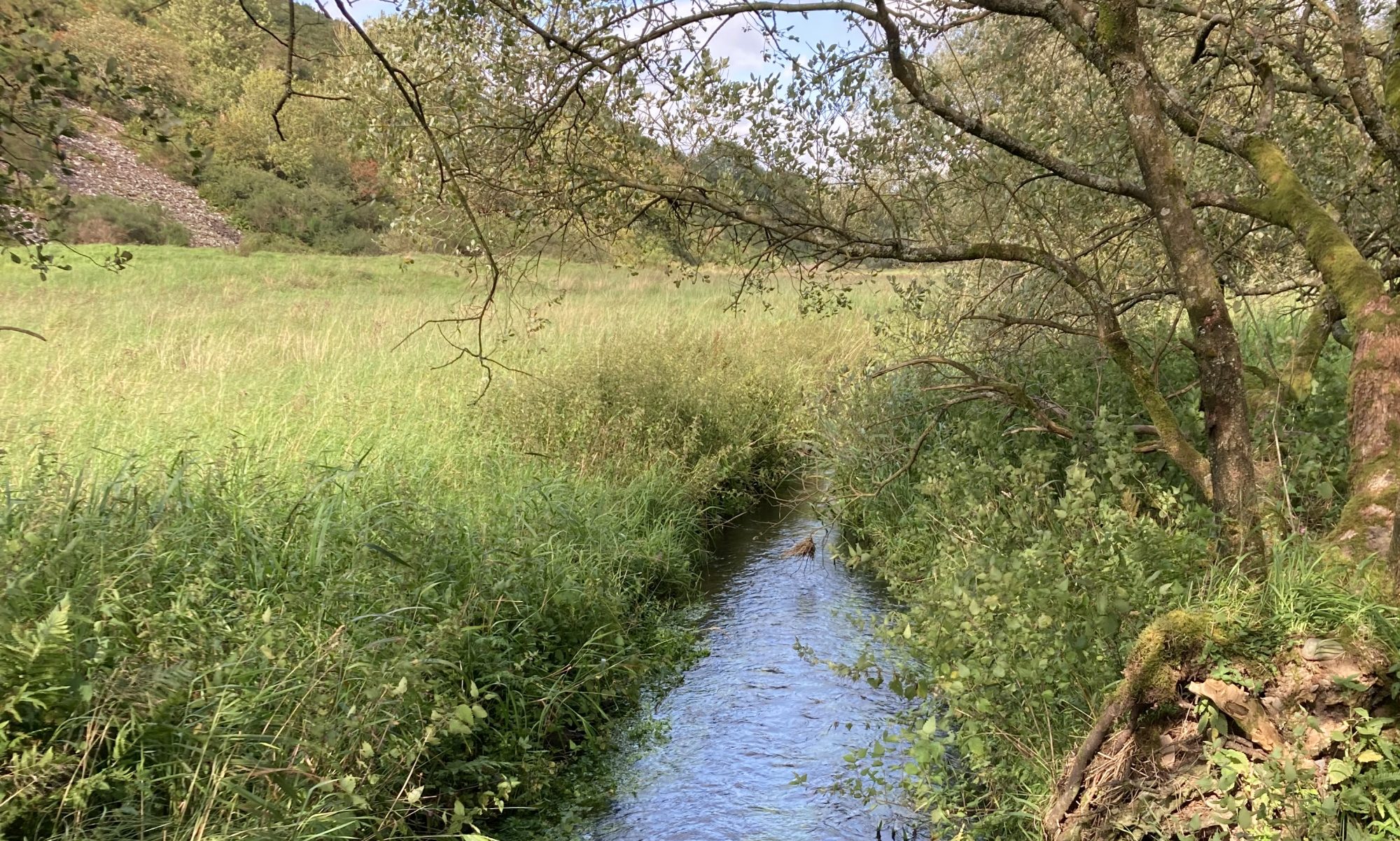
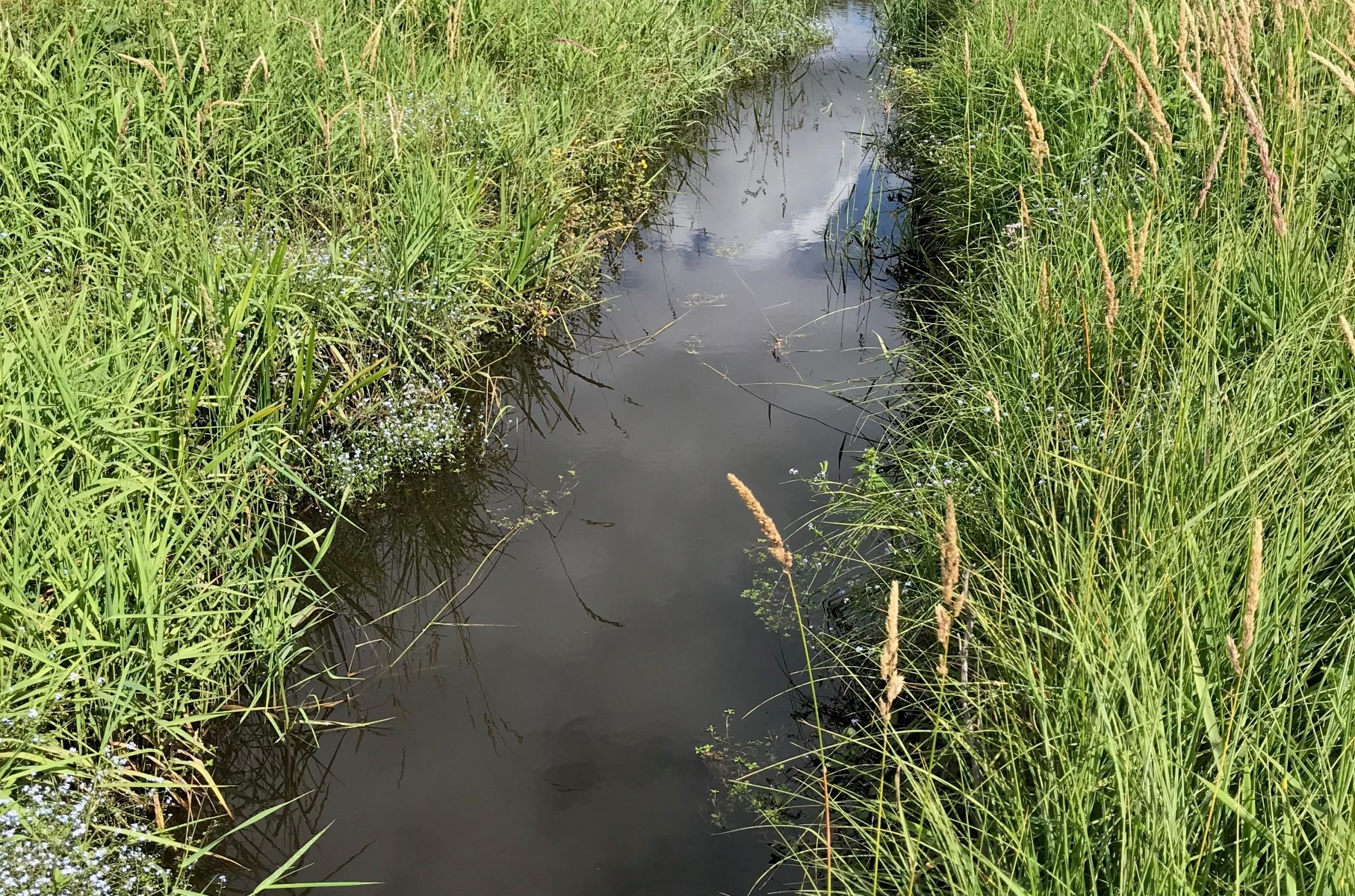
Along this section, the burn is regulated by an enormous dead-straight dike. It has very obviously been confined along all of its upper reach: the opposite bank is built up with stone dredged out of it and it runs in unnaturally straight lines all the way to the Cuil Bridge.

At the burn, we meet up and compare notes. We are fortunate in this session to have professional expertise on hand. I am amazed by their exhaustive knowledge and the understanding with which the trained eye can pick out details that the novice, like me, misses. From beneath the skull of a perfectly polished sheep’s skeleton, a red-breasted carrion beetle is picked up and turned over to reveal his identifying colour before being returned to the ground to carry on his work. This beetle is apparently quite rare and I am told that finding them here indicates an environment with high biodiversity.
Trudging back up the hill, despite the water running into my boots, it feels like a morning well spent. I have remembered two important things: wood sorrel is an indicator of ancient woodland and the carrion beetle is a very good sign.
– – – – – – – – – – – – – – – – – – – – – – – – – – – – –
If interested in contributing to the blog, please send an email to glenmidgeburnproject@gmail.com.
 The Glenmidge Burn Project